

At the February 2026 California Democratic Party (CDP) convention, a caucus of about 100 delegates from Sacramento area congressional District 7 failed by two votes to deny out of touch corporate Democrat and longtime incumbent Representative Doris Matsui the party endorsement outright and force a vote of the full Central Committee. Before the vote, Nancy Pelosi and several other House members entered the room in what was at least a breach of propriety. The caucus chair felt obliged to invite Pelosi to say a few words, which morphed into a lengthy endorsement of Matsui—clearly intimidating a few delegates whose votes tipped the scale.
Despite large-scale ground mobilization by DSA and others, Matsui prevailed in a close race with DSA-endorsed Mai Vang. If only we had elected a few more solid progressives, Matsui might not have been able to brag of the endorsement in her campaign, which also featured some really nasty negative super PAC ads. With 20 more allied delegates, Vang could have won endorsement and probably the election.
The opportunity for DSA
DSA, other socialists and solid progressives we support have met increasing success this year in elections around the country. Voters are hearing our message and responding, while the right in both major parties has used red-baiting and fear mongering to foil our candidates.
The Democratic Party as a whole, nationally and in most states, remains in the hands of conservatives who are fine with taking corporate money and doing the donors’ bidding; oppose working class priorities such as single payer healthcare; and back war and genocide—all as they skewer democratic processes internally.
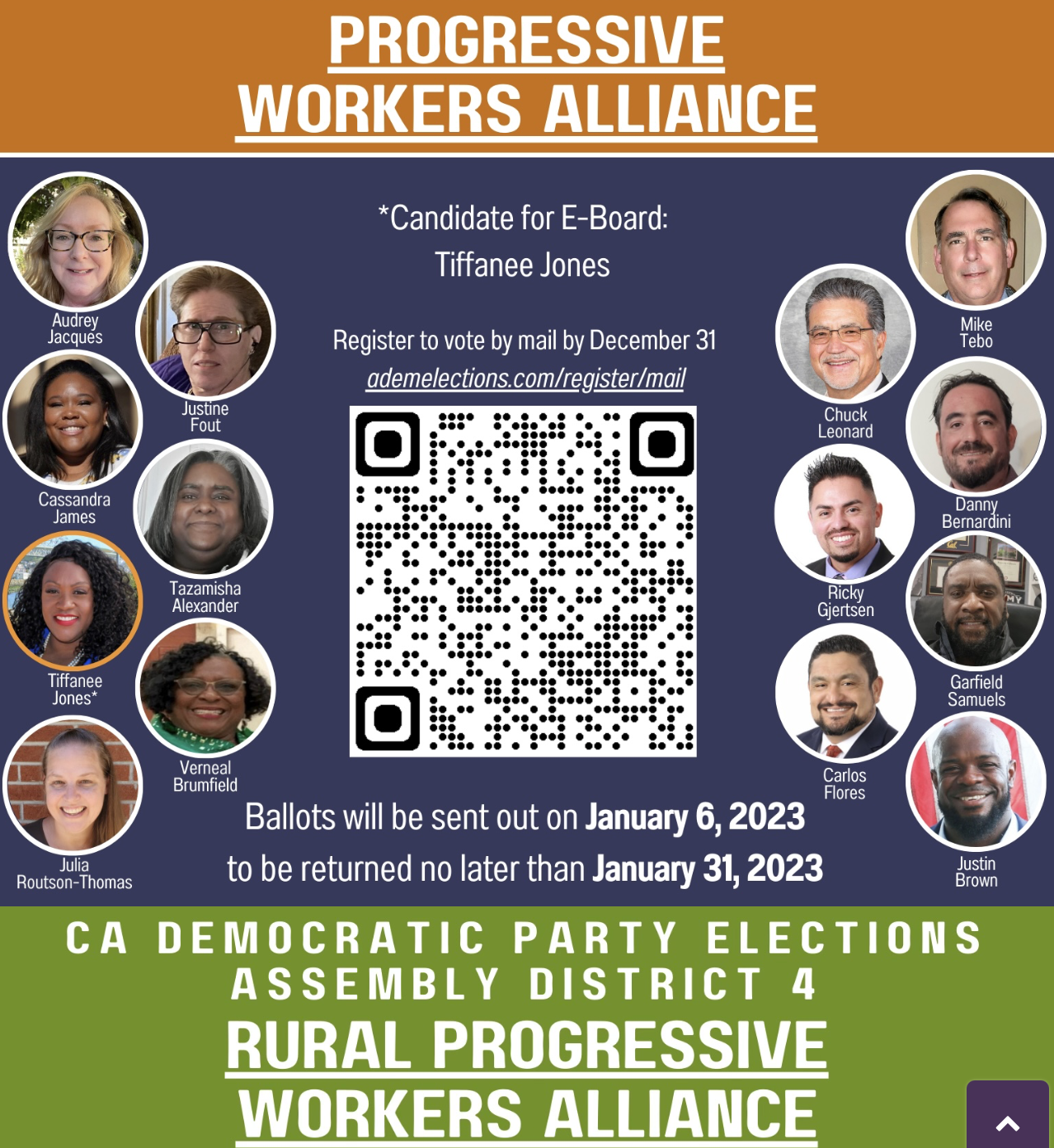
The California party nevertheless enables some democracy, albeit complex and confusing, in choosing its governing Central Committee of about 3,500. One-third of the delegates are elected biannually by registered Democrats in every Assembly district; these Assembly District Election Meetings (ADEMs) will occur in early 2027, with preparations well under way now. A year later, a similar process will determine another third of the seats through county central committees—on the primary ballot in Sacramento and some other counties – methods vary.
Needless to say, the two-thirds elected in these two processes, together with progressive legislators and their appointees, could constitute a majority and shake things up bigly in the party, with national reverberations.
How it works
Delegates to the state Central Committee attend an average of one state convention a year (or line up a proxy), vote to endorse candidates for public office* (see below); elect the party chair and other officers; take positions on legislation and ballot measures; revise the party platform every two years; and pass policy resolutions. They can also join one or more caucuses and other statewide party organizations defined by identity, subject matter or politics – e.g. the Progressive Caucus and the newly formed California Democrats for Justice in Palestine.
The way to succeed in these ADEMs is to form slates of candidates pledged to supporting each other – 14 in every Assembly district for ADEMs– and to exercise slate solidarity in campaigning. The actual slate formation needs to happen independently in every district; in reality, there are 80 separate elections.
Building the People’s Democracy Network
Helping organize the campaigns is the People’s Democracy Network (PDN), a new formation on its way to becoming a PAC working outside the party. It is focused on building a broad left coalition specifically for internal party struggles – i.e. not competing with other formations but striving to unite them solely for this purpose. For more details, with embedded links to the full PDN platform and an interest form for local slate formation, see https://tinyurl.com/PDN-ADEM-2027.
Candidate registration opens December 7 and closes January 8, but they appear on the ballot only as individuals. That’s why it’s important to solidify progressive slates in November, so members can campaign as a unit. Voters get 14 votes, and the top seven of each gender win.
Then, in January, PDN will pivot to getting out the vote. This means 1) candidates and supporters contacting everyone they know who is registered Democratic not only in their district but all over the state, encouraging them to vote for the progressive slate in any districts that have them (PDN will make this information available); and 2) allied organizations informing their members about how and for whom to vote. Voting is mostly online, requiring a complex series of steps, and with an in-person option in each district on part of a weekend day in February. Only registered Democrats can vote, but they can switch their registration up to the last day of voting (better to do that and confirm sooner).
Turnout for ADEMs, with their special registration requirement, is historically low, meaning a few votes can make a difference in many districts.
Many DSA members have been elected in previous years, in coalition with independent and union-affiliated progressive individuals and a spectrum of other left/progressive groups, which are typically focused more on regular electoral and other campaigns, but supportive of building left power in CDP.
If you’re considering running for delegate, please submit the interest form right away, and/or contact me or others you might know who are working on constructing slates in your or nearby Assembly districts. Then stay tuned for information on how to support the slates when voting happens in early 2027.
An important deadline to mention is that anyone considering running for delegate must have been registered on the voter rolls as a Democrat at their current address by election day, November 3. Voters, however, can make the switch up to the last minute in February – though best more in advance. It’s easy to do online at registertovote.ca.gov. And you can change back just as easily after the votes are counted.
To read about this statewide effort to gain power in the party as a left coalition, see https://tinyurl.com/PDN-ADEM-2027. Got questions or want to discuss with me one-to-one? Please text or call (916 769-1641), or on Signal.
* After writing this I came to better appreciate another reason to elect delegates who will vote in progressive statewide officers (and regional directors). Super progressive Sean Frame challenged an incumbent Republican (!) in Senate District 6 so of course was “endorsed.” But he got zero financial or other support from the party – and lost by about 1 percent. A centrist Democratic Assembly candidate in an overlapping district, meanwhile, got $3 million in CDP support and knocked off a Republican incumbent. Decisions on support for candidates are made in back rooms, with no grassroots input. But delegates can replace the people who make them.