The Politics of Distraction: Fascism and the Iran War
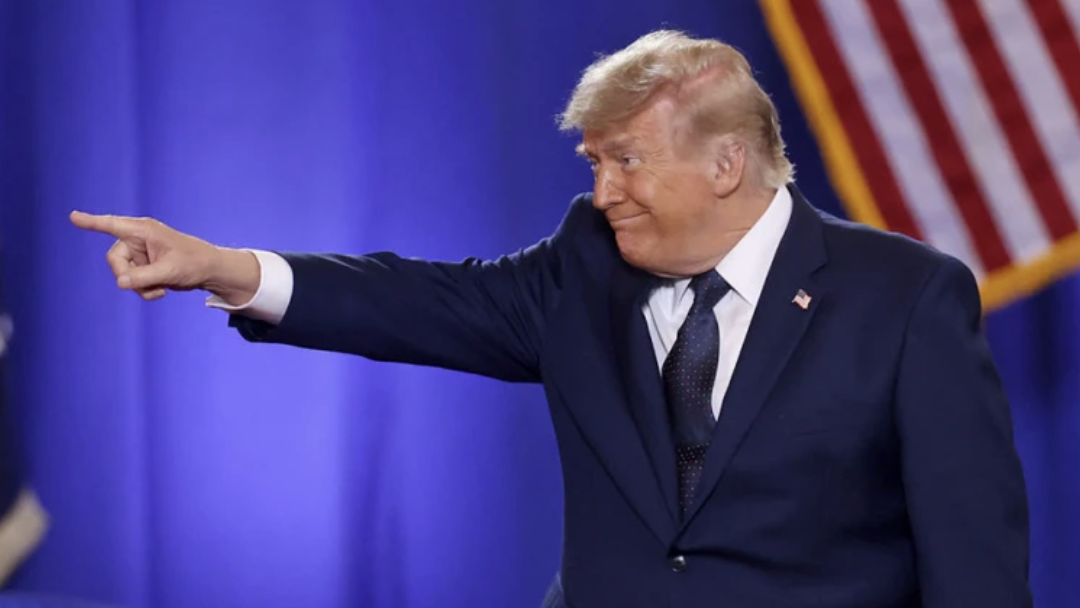
“Look over there!”
Fascism is in power in America. But America is not yet a fascist country. This conundrum explains a war without justification, plan to win or exit strategy.
Ranking high on any checklist of items comprising the elements of fascism would be scapegoating a particular population, making it the target of frustrations, anger and envy whipped up by the ruling class. No matter whether the bullseye is affixed to Jew or Palestinian, immigrant, “antifa”, democratic socialist or trans, the acts of othering and dehumanizing an ‘out group’ in an attempt to purify the nation and bind it together through hatred of the common enemy are central tactics within the fascist project.
Similar effects may be achieved through demonization of another country, or at least its leaders, in the path to war. Trump and his administration are sloppier than their predecessors, who actually took some time beforehand to explain why “we” were going to war in Vietnam or Grenada or Iraq (fill in the blank), generally sticking to one or two more or less consistent—if untruthful—rationales. Our current administration can’t be bothered, jumping day to day among various whack-a-mole excuses—destroying Iran’s nuclear capacity; regime change; jumpstarting a revolt from below; guaranteeing Israel’s safety—for death and destruction on behalf of naked acquisitive imperialism, self-dealing and to distract from growing problems on the home front.
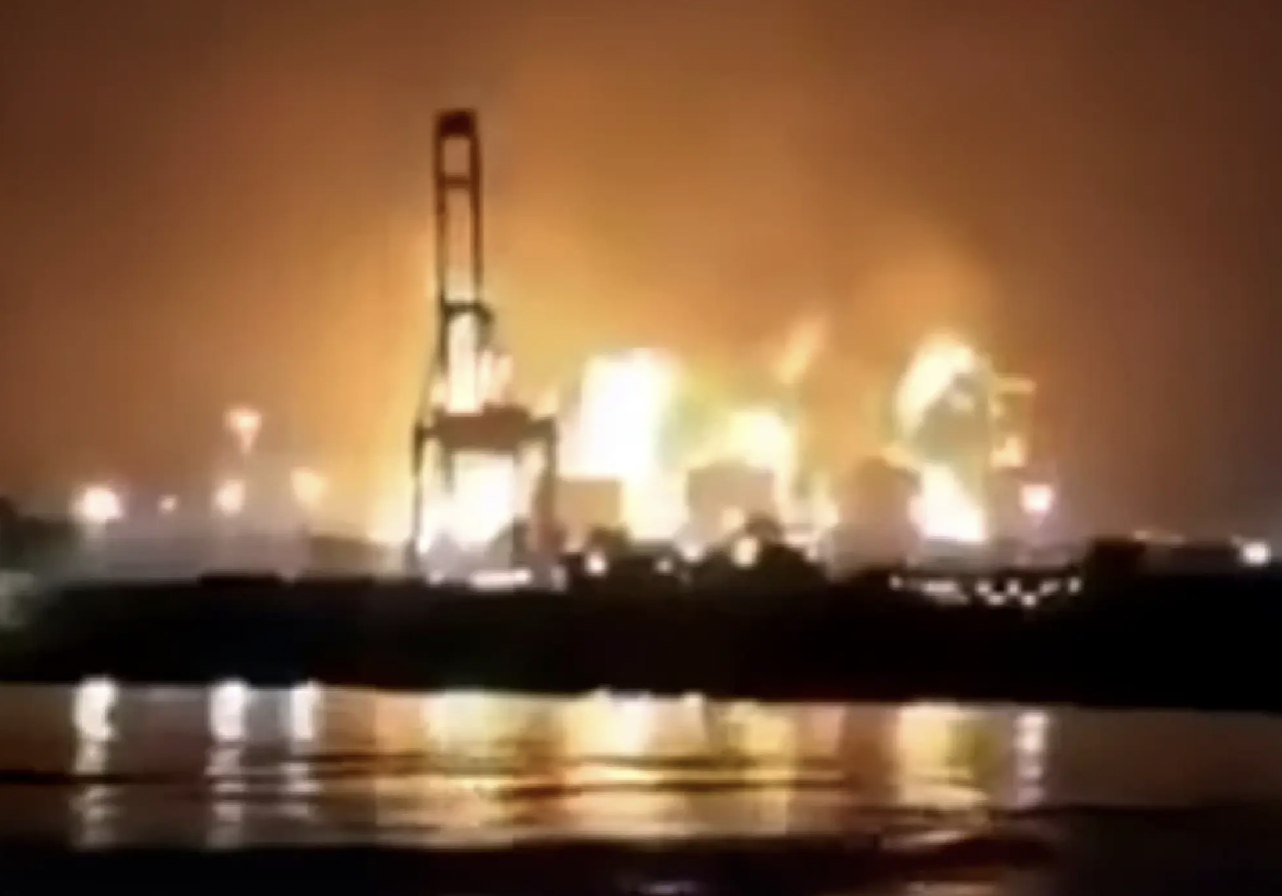
Qatar LNG facility burns
So now we have war (safely across the world, in our screens, not our streets) to draw our attention away from the Epstein files (high profile), the impact of massively shifting government resources from help to harm (slow motion disaster, less visible but becoming harder to ignore) and growing outrage at this administration’s assaults on immigrants, civil liberties in general, and the standard of living for the working class and middle classes.
Pointing elsewhere
Of course, it doesn’t take fascism for capitalist rulers to push a politics of distraction; nor to redistribute state resources upward or “starve the beast”. These are well established conservative (and neoliberal) practices. From the time of The Wizard of Oz and its “pay no attention to the man behind the curtain” scene, it’s commonly understood that despotic rulers, when cornered, point their finger elsewhere, anywhere away from themselves to get those pesky citizens off their backs. The politics of distraction by themselves don’t necessarily mark a regime as fascist.
So then what does the war on Iran tell us about what we’re involved with here and now? Fascists have been in charge for the past year and counting of the most powerful force in our society, the federal government. Doesn’t that make the United States a fascist country? No. Because they have not been able to achieve the consent of the governed, a good chunk of whom didn’t think they were voting for this—or various thises—when they voted for Trump. Instead, since its electoral victory of November 2024 the MAGA regime has been steadily losing support in the electorate and in the streets. Despite its best (worst) efforts, civil society remains deeply contested. And the unpopular war in Iran could be the tipping point in the struggle for the hearts and minds of Americans.
The fifth stage
According to Robert Paxton in his Anatomy of Fascism, fascism usually passes through five phases: birth of a movement; rooting in the political system; taking power; exercising power; and then, over time, motion toward either entropy or radicalization. Entropy means a loss of forward motion, a gradual relinquishing of control during a hard-fought restoration of democratic governance. Radicalization means spiraling toward increasingly repressive actions aimed at its own internal population, and the initiation of war.
The military adventure launched by the Trump administration in Iran signals that we are moving from Paxton’s fourth to fifth stage. Faced with blowback over the Epstein files from segments of his own coalition along with opposing forces, a growing protest movement in the streets over the ethnic cleansing represented by brutal ICE invasions in Democratic-led cities, and consistent defeats in the political contests leading up to this November’s congressional elections, the flailing Trump regime has unleashed forces it cannot control.
Externally there is the expansion of nihilistic Zionist violence from Gaza to the rest of the Middle East, directly supported by the US military, whose massive firepower is now revealed to be deployed in inverse proportion to its strategic capacities. The Maduro kidnapping in Venezuela accompanied by random murders in the Eastern Pacific and Caribbean foreshadows a more sustained and deadly assault on Cuba. The deliberate alienation of once stable trade and geopolitical partnerships through erratic tariff impositions is being partially walked back, but not without having inflicted lasting worldwide economic shocks now exacerbated by the Middle East war.
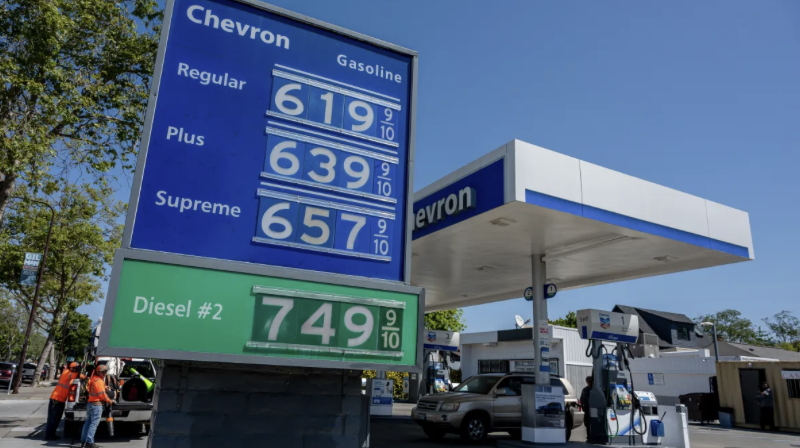
Pump prices are changing some political views
Internally, these macroeconomic factors are exerting a noticeable pocketbook impact on Americans. It’s the noticeable part, not the impact itself, that’s worrisome to Trump and MAGA leaders; hence the need for distraction. Does the war distract enough from the heavy handed assemblage of American fascism? Probably not, because each time the American car owner goes to the pump she is reminded of the costs of the war. Every American farmer facing foreclosure due to rising costs sees its impact. With every energy production and distribution center in the Middle East hit by Iranian drones on the evening news the viewer is reminded of the associations Trump wishes to avoid: war and oil and fossil fuel dependence and economic chaos.
A smaller but sizeable number of people, mostly members of the professional /managerial / technical class, have become politicized over related issues: the erosion of US technological and scientific prowess, sacrificed on the altar of fossil fuel profits as China leaps to global leadership of the green energy transition. A quarter million of these folks have been removed from the federal government payroll, with trickle down adverse effects in state governments and universities.
Birth to twins
A great accomplishment of MAGA at the outset of Trump 2.0 was the Faustian forging of a ruling class coalition between a bloated tech capital that knows better, but is too besotted with the AI bubble to care, and a fossil fuel industry that cares about nothing except extraction of as much profit from global environmental destruction for as long as possible. The two factions of capital tied the knot on the altar of a deregulated economy designed for internal surveillance and control, and external military expansion. But with its consummation in the Middle East, this ruling class marriage seems to have given birth to twins: entropy and radicalization of the current regime.
For Paxton, war is not incidental to but rather the engine of fascist radicalization; the initial battlefield victories of Germany, to take the classic example, sped the process, with expansion eastward running hand in hand with extermination of the mentally ill and physically unfit on the way to the Final Solution.
The United States is of course a different country in a different historical situation. The internal radicalization of the fascist regime signified by state sanctioned carnage carried out by stormtroopers in the streets of the Twin Cities and elsewhere and the incarceration in detention centers of tens of thousands of immigrants, over two thirds of whom have no criminal records, does not yet compare in scale with mid-twentieth century European fascism, but marks a new departure in US history, at least outside the Jim Crow southern United States.
It’s possible that the world capitalist system can weather all this for a while, even returning to a patched up Frankensteinian democratic skin over the metastasizing rot in the economy, as recently transpired in Hungary. But it clearly can’t stabilize for the long run this way. The continuous externalizing of climate effects from business as usual and the threats posed by 40% of American GDP growth predicated on AI investment without regulatory guardrails cannot be resolved on their own terms or without the transition to a sustainable planned economy.
The war in the Middle East pushes in the opposite direction, but its intended distractions (for the masses) and attractions (for the ruling class asses) are being undermined by its unintended effects: scrambling of the world economy, utter failure to bring the Islamic fundamentalist regime to terms, and the most sustained and determined organizing by progressive forces in the United States in decades.
The long decay of American empire has now, thanks to fascism at the controls, hit fast forward. While it is imperative to remain watchful of the impact of the war on internal fascist radicalization (the potential to double down on ICE invasions, incarcerations and deportations, election rigging, threat of martial law), entropic unraveling and the opening for progressive coalitions may prove the stronger force. The outcome of that contest depends on whether we are able to build on the examples of Minneapolis on January 23, No Kings in March, and May Day Strong to generate a transmutable energy, alternating between the streets and the ballot box as needed.
