Who Rules San Diego?
BOOK REVIEW
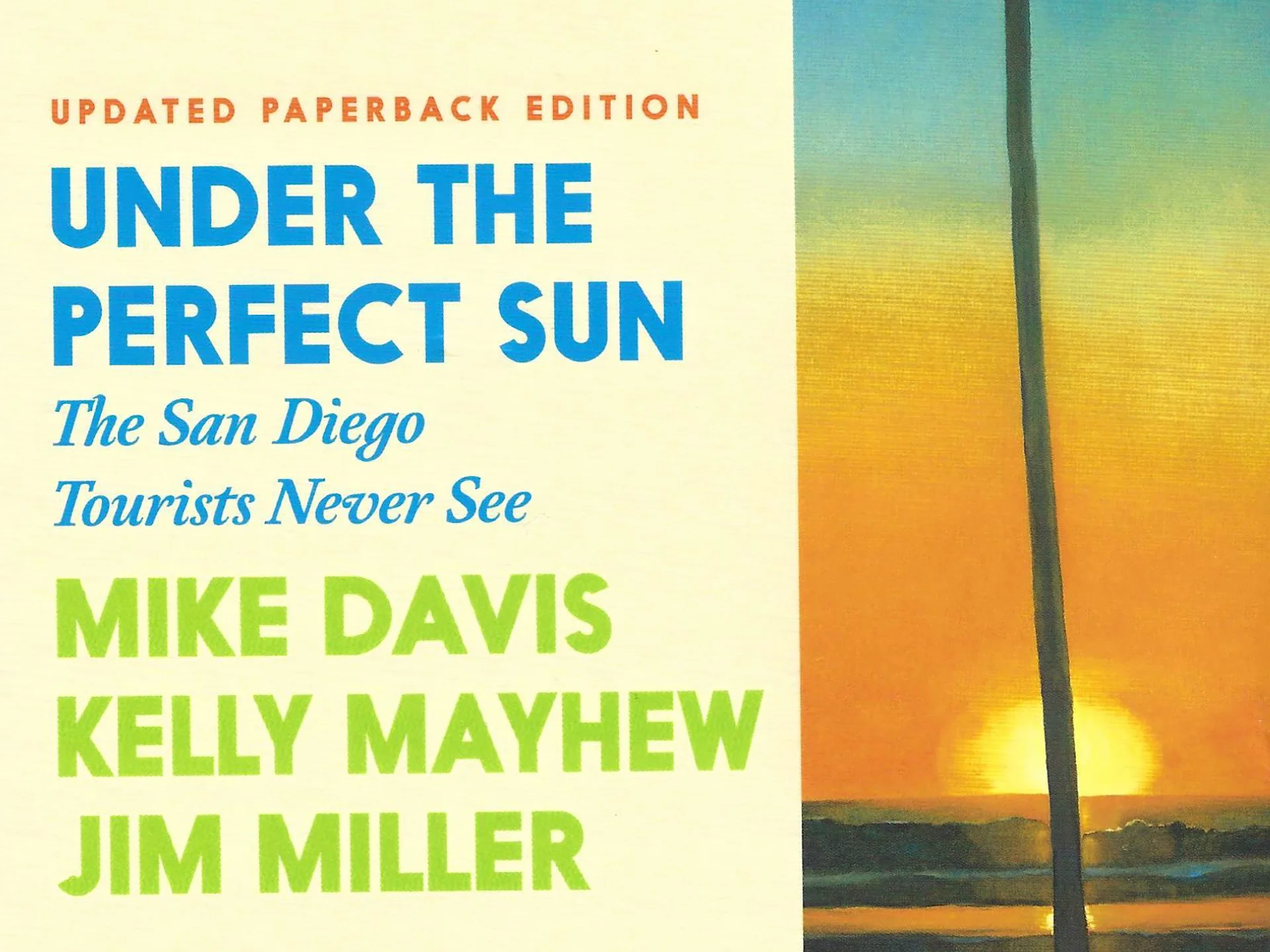
Under the Perfect Sun: The San Diego Tourists Never See (Second Edition)
Mike Davis, Kelly Mayhew and Jim Miller
Seven Stories Press, 2026
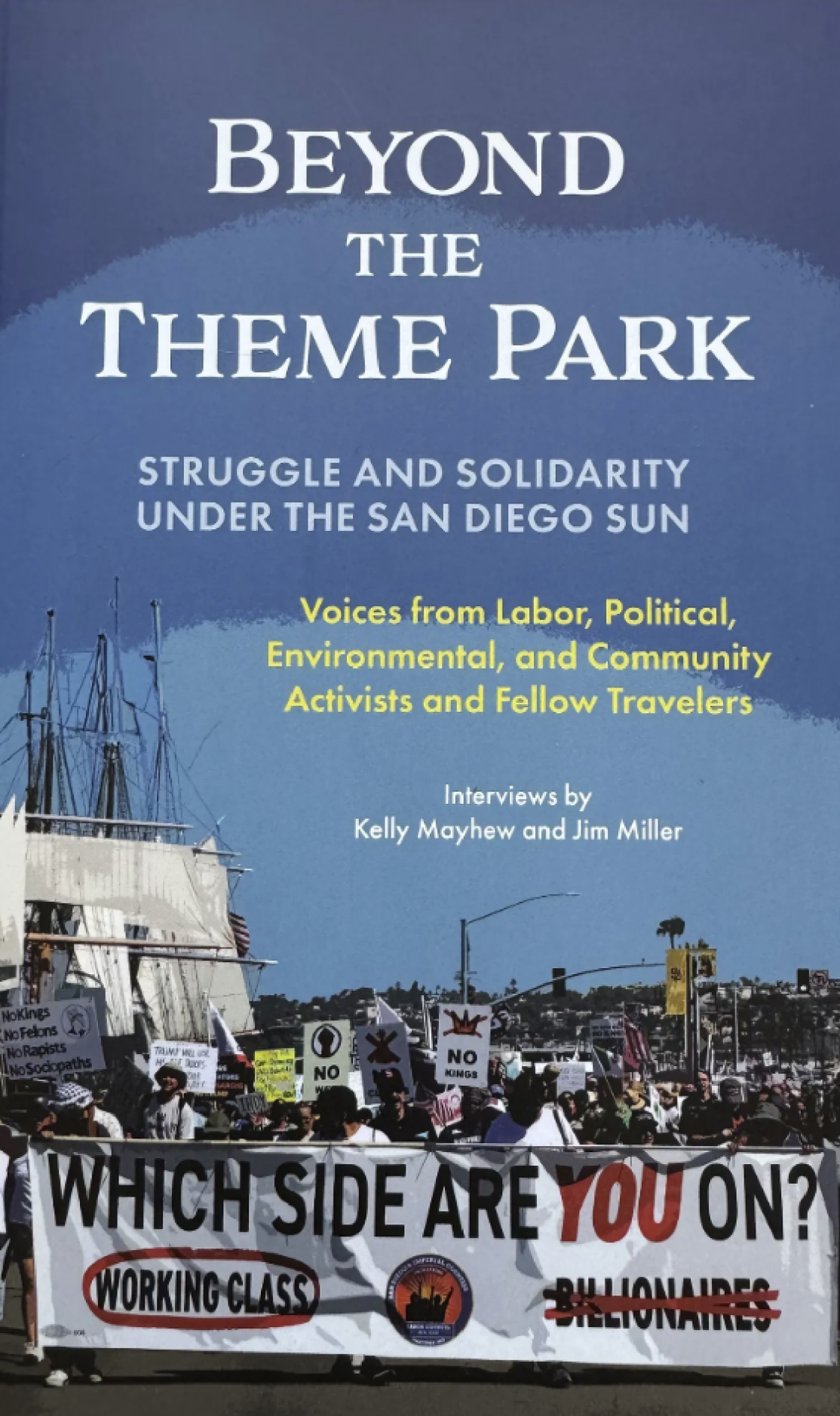
Beyond the Theme Park: Struggle and Solidarity Under the San Diego Sun
Interviews by Kelly Mayhew and Jim Miller
Center for Policy Initiatives and American Federation of Teachers Guild, Local 1931
This year’s republication of Under the Perfect Sun: The San Diego Tourists Never See has been anxiously awaited by San Diego progressives and leftists. A master work by the late Mike Davis and his co-authors Jim Miller and Kelly Mayhew, Under the Perfect Sun went out of print only a few short years after its original publication in 2005, and has since then been passed around, checked out via interlibrary loan, and transmitted via PDF among organizers and activists hungry to learn about a city that hardly seems to know itself. Yet the new edition means more than an opportunity for San Diego leftists to finally have and hold their own copy—it’s an opportunity for our comrades across California and beyond to understand how one city’s development shaped the contemporary forces we must map, move and overcome in our quest for working-class rule.
Under the Perfect Sun stands alone as a record of San Diego’s left and labor history, but it’s also distinguished by the structure of the collaboration. The book is made up of three main sections, separately authored or, in the case of Mayhew’s contribution, curated. Following an introduction by journalist David Reid is a political and economic history by Mike Davis, then a chronicle of insurgent fights by Jim Miller, and the book concludes with a compendium of oral histories gathered by Kelly Mayhew. The new edition includes a sampling of contemporary testimonials gathered by Mayhew and Miller to accompany this year’s republication; available in full free and online as the companion publication Beyond the Theme Park (download available from the Center for Policy Initiatives website). (Full disclosure: I am one of the activists interviewed for that book.)
Structuring opportunity
Flipping the order, let’s start with the oral histories. And what a start. In both Under the Perfect Sun and Beyond the Theme Park, Mayhew opens with leaders in San Diego’s civil rights fights – Harold Brown in the former, Shirley Weber in the latter. I want to be very clear: DSA members and other leftists who only know Shirley Weber as California’s current secretary of state nonetheless need to read her story. It reveals what is possible once a structure is changed to unblock opportunity, and consequently how crucial it is to examine and understand structures at all levels. From Harold Brown, you’ll learn the lonely experience of fighting for economic parity and how that focus determined agendas of the early 2000s. Also in Beyond the Theme Park is Center for Policy Initiatives’ executive director Kyra Greene, who at the launch event for the new edition noted that the comparatively small civil rights movement in San Diego factors into the persistent struggles of the left today.
Also featured in both books are many of the area’s most significant labor leaders, movement organizers, nonprofit directors and politicians. As Mayhew put it at the launch, what you get from oral histories rather than third-person narratives based on newspaper articles and other archives is an understanding of experience. It matters to know what moved Lorena Gonzalez and Sean Elo-Rivera into their current positions and commitments (Beyond the Theme Park), just as much as it matters to see how binational activist Enrique Davalos ended up choosing San Diego, and what working for the Environmental Health Coalition looked like for Sonia Rodriguez, who lived the toxicity of Barrio Logan firsthand (Under the Perfect Sun).
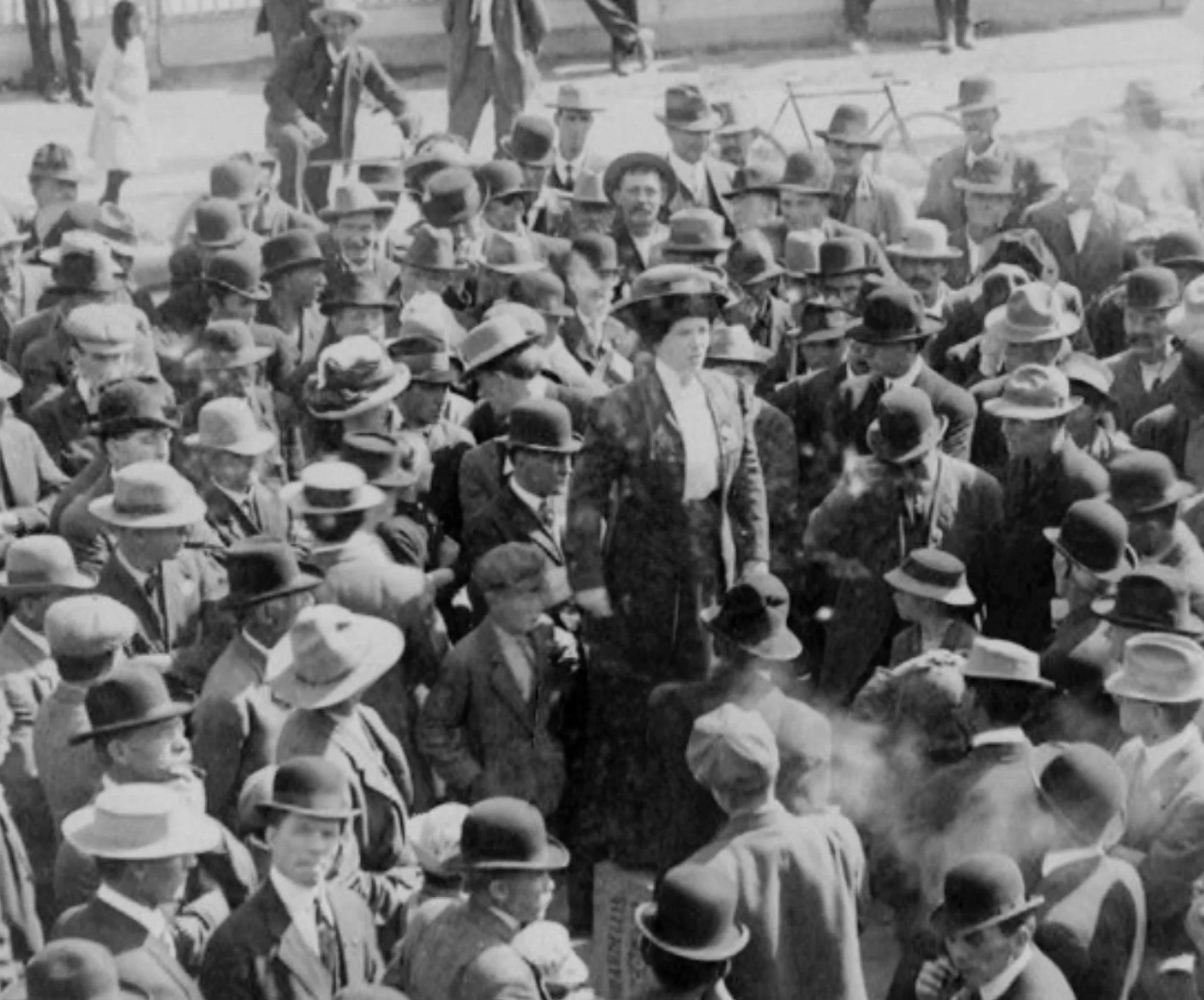
The IWW Free Speech Fight was a landmark struggle in San Diego labor history.
Repression and amnesia
Jim Miller’s episodic journey through San Diego’s left struggles changed my perspective utterly when I first read it 7-8 years ago, newly activated and unsure why everything in San Diego’s mainstream political life seemed so remote. Though I am myself a transplant, San Diego was always a fixture in my life as the birthplace of my military-family parents, who continued in that tradition. They graduated from UC San Diego’s first bachelor’s degree cohort. They grew up with the city as it boomed through the Cold War years. Yet I never learned anything from them about San Diego’s political life, and in the truest sense possible, San Diego hid itself from many of its own children. As Miller writes, struggles beginning with the Free Speech Fight in the early 20th century onward were dealt with by both repression and amnesia, summarily dismissed or distorted beyond recognition by credulous historians drawing exclusively from tilted accounts.
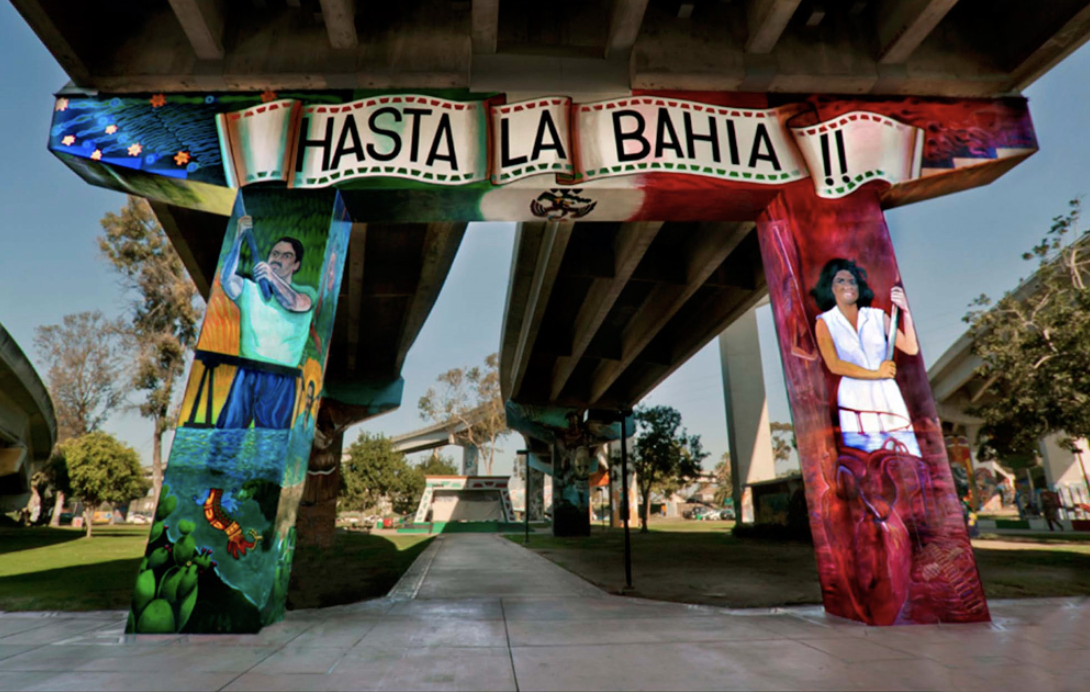
Chicano Park is the largest collection of public murals in the nation, and extraordinary in their virtuosity.
What’s so significant about memory? After all, capital manipulates government and its aligned institutions everywhere; newly developing leftists might understandably believe that since the factors of capital control are continuous, the dynamics of contesting them are transferable from one place to the next. What is so critical about Miller’s history, though, is learning about the victories alongside the setbacks. While the Magonista revolt was a rout and Industrial Workers of the World (IWW) organizing was effectively suppressed by vigilantes in the early twentieth century Free Speech Fight, the establishment of Third College at UC San Diego and the creation of Chicano Park are examples of community interests consolidating as exercised power. What’s so significant about erasure? Last year I walked my elderly parents around Chicano Park – the largest collection of public murals in the nation, and extraordinary in their virtuosity – and told them the story of its founding. They had no idea. Not even that it exists.
Completing the flipped order, Mike Davis’ history of political and economic power in San Diego visits many of the themes in his Los Angeles histories, such as City of Quartz (1990) and his last-published book, Set the Night on Fire (2020). While Davis is recognized as one of the last century’s most influential Marxist authors, many DSA members may be new to his work. Under the Perfect Sun is a fantastic start. The section asks who rules San Diego, answered by the overriding contest of “smokestacks” versus “geraniums.” With smokestacks understood to be the faction driving for infrastructure that could enable large industry, the geraniums of San Diego’s past and present generally prevailed, focused on slow urban growth and economic sectors that alienated mass organizing and working class consciousness by their very nature – tourism and the military.
Davis’ thesis is that through these competing capital factions, San Diego’s power has oscillated between what can be thought of as private governments, with the government of publicly elected officials acting primarily for those interests. As this history progressed beyond the publication of Under the Perfect Sun his thesis and indeed the center have held: first Republican, now Democratic, San Diego’s officials stand on a continuum of stewardship for private elites. Without working class institutions effectively contesting for power, that center has reconstituted in the last 20 years to include the racial, ethnic, gender and sexual orientation minorities rebuffed by a myopic GOP. At a time when parties are first and foremost brands, the center-right now makes its approach through campaigns formally unaffiliated with the GOP like Larry Turner for mayor in 2024 and now Richard Bailey for city council, who adopted Zohran Mamdani’s design palette for his primary campaign.
Look beyond slogans, follow the money
Tracing how these fights have articulated is critical for leftists across the U.S. as urban politics are gripped by the polarity of “YIMBY” versus “NIMBY.” As climate change advances – a key concern of Davis in his later years – leftists, unions and working class communities of interest draw factional lines around what is to be done about unaffordable housing, the unequal and unjust distribution of pollution, rapid transportation and the U.S.’ overreliance on home ownership to build social security. Reading about the stratagems of San Diego’s smokestacks and geraniums illustrates just how handily working class anxieties can be manipulated to serve masters we did not choose – even to the extreme of surrendering public resources to a power as remote and impervious as the U.S. military. Look beyond the slogans and follow the money.
In the 2026 coda, Jim Miller reflects on the changes in San Diego in the last 20 years and narrates some of the most significant events since Under the Perfect Sun was first published. While the cost of living is now driving workers out, the representation of historically marginalized groups in office is marked as a welcome change. A recent win is the reversal of bans on project labor agreements (PLAs) by municipalities across the county and the commitment by the City of San Diego to adopt PLAs going forward. Often, labor in San Diego now leads where our politicians falter, and the closer cooperation between unions and community organizations like DSA gives hope that someday we’ll escape the recurrent corruption dogging San Diego as Enron-by-the-Sea.
Under the Perfect Sun gives a view of collaboration as process and praxis, with each author bringing to the book a life of service in its different forms. Mayhew and Miller have both served as leaders in their local AFT chapter, bringing their San Diego City College students into organized activity through the AFT internship program they launched as a pedagogy of experience. Together they founded City Works Press and with it the San Diego Writers Collective, and with journalist Doug Porter publish The Jumping Off Place, an online platform for independent writing. Their legacy is still evolving, and humbling in its scope. The presence of Mike Davis the organizer and working class son in his writing gave us one of the clearest voices in a quintessentially American Marxism, and a view to how the natural riches of Southern California can be ours when we fight. Elbows up and solidarity bound, let’s carry his spirit on.