Quick, what action is guaranteed to freak out the capitalist class? If you answered, “Propose a credible campaign to pass a progressive tax”, congratulations! Ever since Marx and Engels in The Communist Manifesto included “taxing the rich” among activities the working class could take to advance its cause, the response by capital to any notion of parting with any portion of its ill-gotten gains has been predictable. Recently we witnessed the lurid warnings of disaster looming in New York should democratic socialist Zohran Mamdani be elected Mayor, emanating from his idea for a modest income tax increase on the wealthy to fund improvements needed by all New Yorkers if they wanted to be able to afford to live in the city in which they work.
The arguments against taxing the people best able to pay higher taxes are stored in a well-thumbed playbook, rolled out of mothballs by defenders of privilege every time the notion of tax fairness re-enters public conversation. But just as mothballs tend to lose their potency over time, shibboleths about taxes in place since Prop 13, passed in 1978 in the dawn of the neoliberal era in California, have lost their ability to shield the rich from voter anger.
Why? Economic inequality, growing over the past fifty years in tandem with the decline of organized labor, has accelerated since the first Trump presidency, and now, with an oligarchy and the MAGA movement well on the way to crushing the sad remnants of New Deal regulations and programs, replacing them with open looting of the public sector, the tired anti-tax refrains are no longer playing well in New York and elsewhere.
Does anyone still believe that billionaires are “job creators”, who would rather pay workers a wage to produce a product than invest in job-killing AI? Does anyone other than Republican elected officials think cutting taxes for the wealthy actually leads to more jobs, versus adding more mansions or yachts to their hoard?
Two proposals head toward the ballot
Here in the Golden State, fourth largest economy in the world, and home to one quarter of the country’s billionaires, two proposals are potentially heading to the November 2026 ballot that would provide the working class with opportunities to retrieve some of the wealth it produces, in the form of state revenues to pay for desperately needed public services. These initiatives will also hand the wealthy a choice: either do right, agree to a modest restoration of tax fairness, and demonstrate that they remain a part of the broader human community; or resist, watch their failed messaging fail again, and further cement pariah status for themselves.
The two ballot measures are currently gathering signatures to qualify for the 2026 November ballot. The “Permanent Funding for Schools and Health Care” is the product of a re-energized progressive tax coalition, dormant since the defeat of Proposition 15 in 2020 (a split roll initiative that would have separated residential and commercial property tax collections), but responsible for two prior victories, Proposition 30 in 2012 and its renewal in 2016 as Proposition 55. These bumped the top state income tax bracket—the top two percent of income earners, or a current $721,000/year and above for joint filers—up to 13.3% (including a 1% surcharge on incomes of a million dollars), bringing in between six and twelve billion dollars per year to bolster schools and social services in the wake of the Great Recession, while other states were slashing funding along with education and healthcare services.
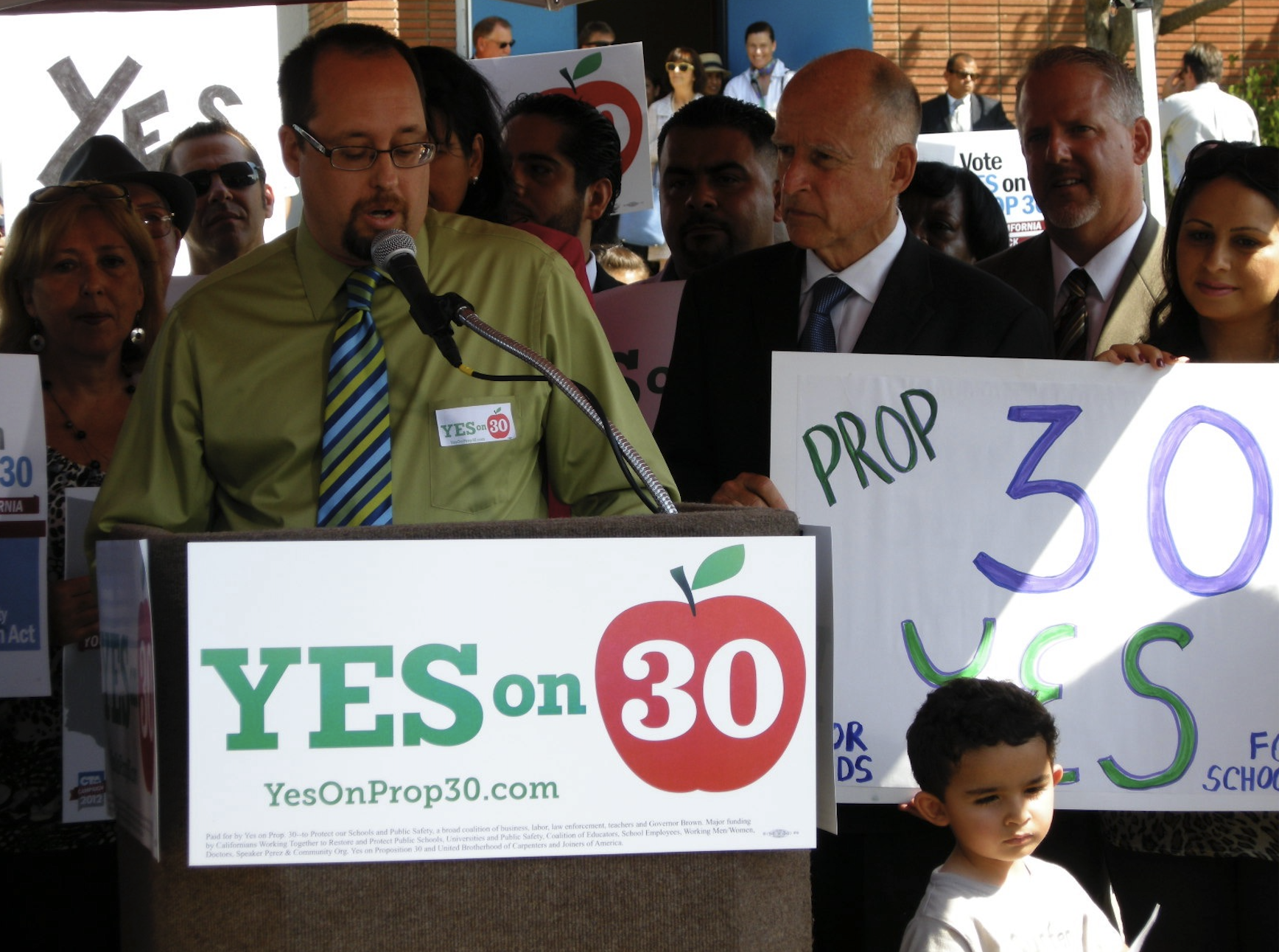
The Prop 30 campaign in 2012 was built from the ground up.
Prop 30 was written as a temporary tax. Prop 55 extended it to 2030. The current petition drive, headed by public sector unions but mainly bankrolled by the California Teachers Association, aims to make the tax permanent. As a tax already in place for more than a dozen years, its rollover is unlikely to produce more than token opposition from right wing rich people who have lost on the issue twice before. Perhaps some of them have learned from experience that (shocker) they are still rich despite paying the highest state income taxes in the country. And the very richest among them might be keeping their powder dry to try to stop the other initiative.
Billionaire tax
This one, a wealth tax on billionaires spearheaded by SEIU-United Health Workers (UHW), has been getting a lot of press lately. The “California Billionaire Tax Act” proposes a one-time tax of 5% on the assets of the state’s two hundred billionaires (who combined hoard almost two trillion dollars) to offset the pending impact of federal cuts to Medicaid funding to the state, estimated to be around $20 billion per year. If left unaddressed, these cuts would throw several million people off of Medi-Cal (California’s version of Medicaid) and destroy tens of thousands of health care jobs. The UHW proposal—issued a title and summary by the state attorney general in the closing days of 2025, a necessary step before signature gathering—is also supported by a southern California hospital association. The tax would raise an eyepopping estimated $100 billion over five years and then expire.
California DSA endorsed the measure at its State Council meeting in December. Crucially, however, the “California Billionaire Tax Act” has no other labor backers, not even the parent organization of UHW, the SEIU State Council. The campaign website foregoes the standard “supporters” page, most likely because there aren’t any. No matter. UHW probably has the money to qualify the initiative by itself, should it choose to do so. Passing it is another question.
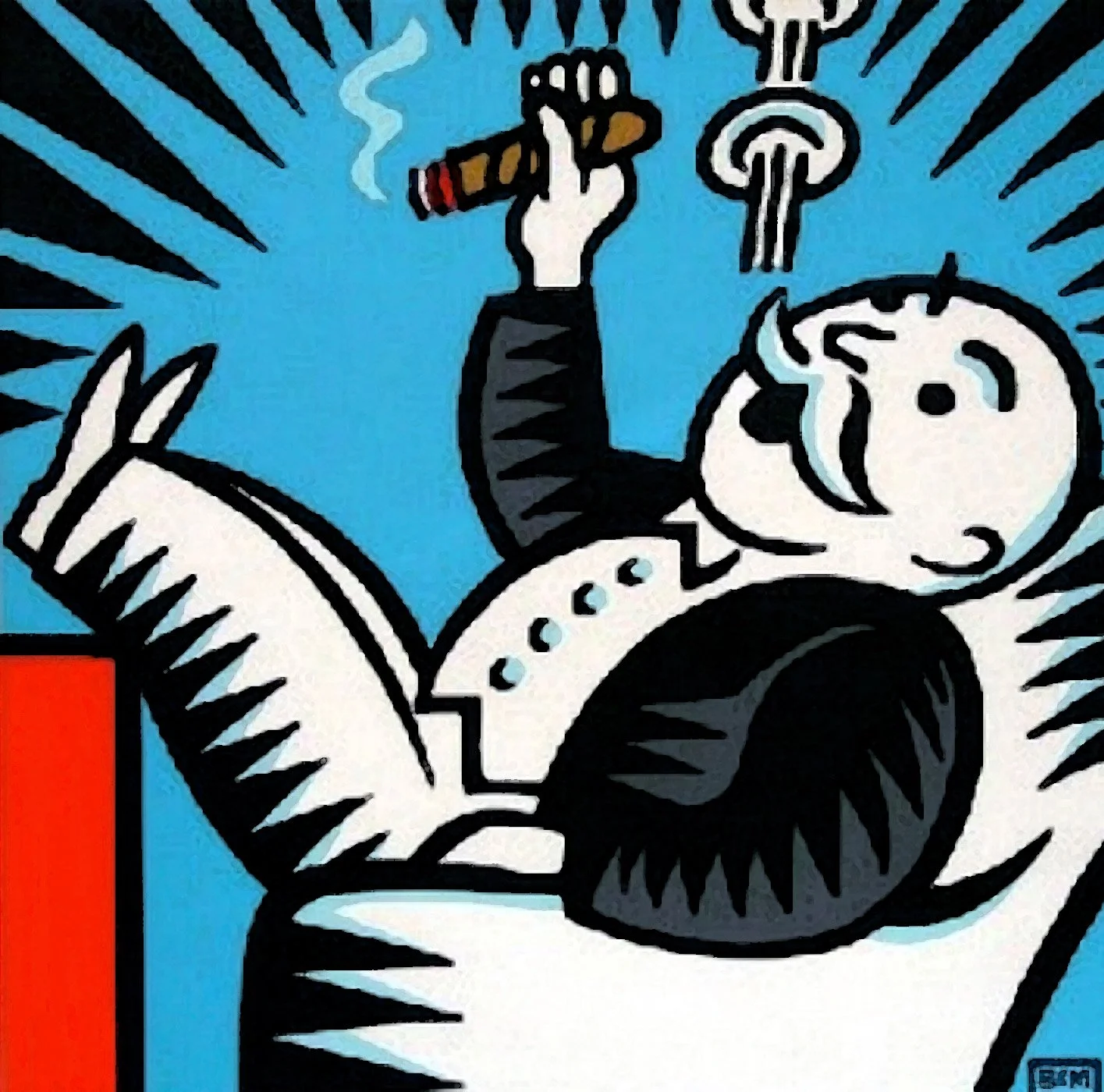
Opposed are, of course, billionaires, several of whom are loudly but not very originally proclaiming that they are moving themselves and their businesses out of the state if the measure passes. Their mouthpieces and credulous mainstream media reporters have kept up a steady drumbeat of hysterical “the sky is falling” rhetoric for the past month. Just a few of the many headlines billionaires can buy: “California’s divisive plan to tax billionaires” (The Financial Times); “Billionaires are Ramping Up Their California Exits on Threat of Wealth Tax” (Bloomberg.com); “Billionaires make strategic moves out of California ahead of proposed wealth tax” (Fox); and “A Wealth Tax Floated in California Has Billionaires Thinking of Leaving” (New York Times).
Class traitor
At least one billionaire isn’t buying the hype offensive, however. As reported in The Guardian, Nvidia CEO Jensen Huang (worth $159 billion) sensibly says, “We chose to live in Silicon Valley, and whatever taxes they would like to apply, so be it.” Class traitor Huang must be onto something that eludes the likes of David Sacks, Larry Page, Sergey Brin and Peter Thiel in their supposed panicked rush to the exit: they will all still be stinking rich and way too powerful for the public good after the measure passes. The public might even come to think they should keep existing if they’re paying a fairer share of taxes.
Silicon Valley Democratic Congressman Ro Khanna agreed on social media: “I echo what FDR said with sarcasm of economic royalists when they threatened to leave, ‘I will miss them very much.’ This historical reference point brought a chorus of right wing calls to primary Khanna.
Let’s be mathematically precise about the potential impact of the tax on the crocodile tear-emitting billionaires. Instead of two trillion dollars in their piggy banks, after passage of the billionaire tax they will be left with one trillion, nine hundred ninety-five billion dollars—pretty much enough to scrape by on, one would think, until rage over economic inequality creates mobs and torches large enough to burn down their mansions, yachts and jets.
Newsom’s consistency
Unfortunately joining the billionaires in opposition is Governor Gavin Newsom. The best that can be said of his position is that he is consistent. Since taking office he has steadfastly opposed any talk of taxing his buddies the ultrarich, no doubt keeping his eye on the prize of billionaire backing for his inevitable presidential run. Here’s a secret, Gavin: taxing the rich is extremely popular with the electorate. Take a cue from Zohran Mamdani. You and your neoliberal ilk in the Democratic Party leadership would be far better off building a campaign from the bottom up than the top down. Or conversely, did you really learn nothing from the Kamala Harris campaign either?
Newsom’s efforts are especially offensive given two bits of historical data. Compare and contrast with former Governor Jerry Brown. Brown, a pragmatic politician, under great pressure from business interests opposed to an increase in taxes on the top two percent, nonetheless refused to allow his state’s schools and services to crater on their behalf, campaigning vigorously for Prop 30 in 2012. Worse than that comparison: Newsom is parroting the canard that taxing the rich drives them out of the state and with them all the supposed jobs they create. In 2012 the same blackmailing lie was repeated endlessly by the opposition. What actually happened? By 2015, the state’s millionaire population had grown by ten thousand; and the state had added a million and a half jobs following passage of Prop 30. With a tiny allocation of investigative reporting, the prestigious publications printing these stories might have added a smidgeon of balance to the billionaire-friendly fear mongering.
No denying the need, but…
No sane person who cares about health care for the poorest Californians can disagree about the need for something like a targeted billionaire tax, given the Trump regime’s federal budgetary moves. And glib, historically false arguments about runaway rich people leaving California a smoking fiscal desert aside, it’s past time for billionaires to cough up a fairer share of taxes.
But many questions arise, out of which I’ll just broach two: if both measures make the ballot, will the feverish campaign against the Billionaires Tax harm the chances of making Prop 30/55 permanent? Failure of the latter measure would blow a large hole in the state’s budget, especially for K12 schools and community colleges, which receive 40% of the proposition’s income. And, can the two campaigns figure out how to get along and push common conversation about taxing the rich into a positive and dominant narrative—instead of, say, allowing the capitalist class to spend bajillions against a divided left to make it “union thugs kill the goose that lays the golden egg for the golden state”?
Time is short. November 2026 will be upon us before we know it. Let’s hope the necessary work of coalition building, message agreement and assembling the field campaigns will show the way to getting the wealthiest Californians to pay their fair share for the common good.
