
PART TWO OF TWO
[Part One appeared in the September issue of California Red. Here it is.]
Now, there was an invisible through line in all three of the examples of local direct action— and that is mutual aid.
When I was a ‘baby leftist,’ developing my sea legs, organizing with the PSL, mutual aid was cast aside as functionally useless anarchist praxis. It was considered band-aids for bullet holes, I was told. However, when I was cutting my teeth during the Student Intifada, organizing alongside Dutch anarchists at the University of Amsterdam, the mutual aid component to the encampments was unavoidable. In fact, it was practically baked into the whole concept! If we wanted to sustain an encampment or occupation, we simply needed supply lines that could feed and water the several hundred students, staff, and faculty demanding the university divest from Israel.
This got me thinking; if we were serious about revolutionizing society, did that merely entail commandeering existing supply chains, hitting the Teamsters and Longshoremen with a coat of red paint, prefixing big chain supermarkets with “The People’s Grocery Outlet,” and calling it a day?
Urban versus Rural
I sat with this thought. In the midst of encampments and occupations, I was also finishing up my masters thesis on the way that geographic conditions shape organizing strategies; examining the differences and similarities of urban versus rural approaches to radical politics. A core pillar of the thesis was exposing the extractive relationship between cities and the countryside as being a microcosm of the relationships perpetuated by capitalist-colonialism, i.e., between imperial cores and their peripheries. The relations of production and distribution are inseparable from the mode of production in which they exist. That might seem abundantly apparent at a theoretical level, but the implications for local organizing are tremendous. Obviously, we want logistics and grocery workers to have strong protections and safe working conditions, where they make good money for the work they contribute to maintaining our supply chains. But simply putting these logistics networks under control of the workers won't change the fact that rural communities suffer from severe underdevelopment and precarious access to goods and services, and it certainly won't fix the “noble savage” view of urban dwellers against their rural counterparts.
I’ll be the first to say that DSA won't be the organization that fixes this structural imbalance in the supply chain or be the mechanic to the relationship between urban and rural communities. That is a longterm problem that will require a serious overhaul in how we shape production and distribution both at home and abroad (good thing we are an anti-imperialist socialist organization!). However, what I want to emphasize here is that the projects and campaigns being worked on by DSA San Diego’s Ecosocialist working group and our mutual aid collective are not simply acts of kindhearted charity but deeply rooted in a theory of building sustainable community power.
Seeding Food Sovereignty is an active campaign by EcoSoc that prioritizes building out community gardens throughout the city that can supplement the caloric intake of the local community. The organizational concept is that by proliferating community garden infrastructure, urban and especially suburban communities can reduce their dependence on alienated supply chains that function to obfuscate where their produce originates. Rather than an intermediary of fluorescent lighting and underpaid service workers, our gardens are sites of community building over the labor it takes to feed one another. The program functions on the old Marxian adage “from each according to their ability, to each according to their needs.” It’s no secret that gardening can be back-breaking work, but the organizers of each garden workday take each person's ability into account by offering a variety of tasks scaled by intensity. From pulling weeds and picking fruit to digging up tree stumps and building planters, there is always something for everybody.
Noble charity?
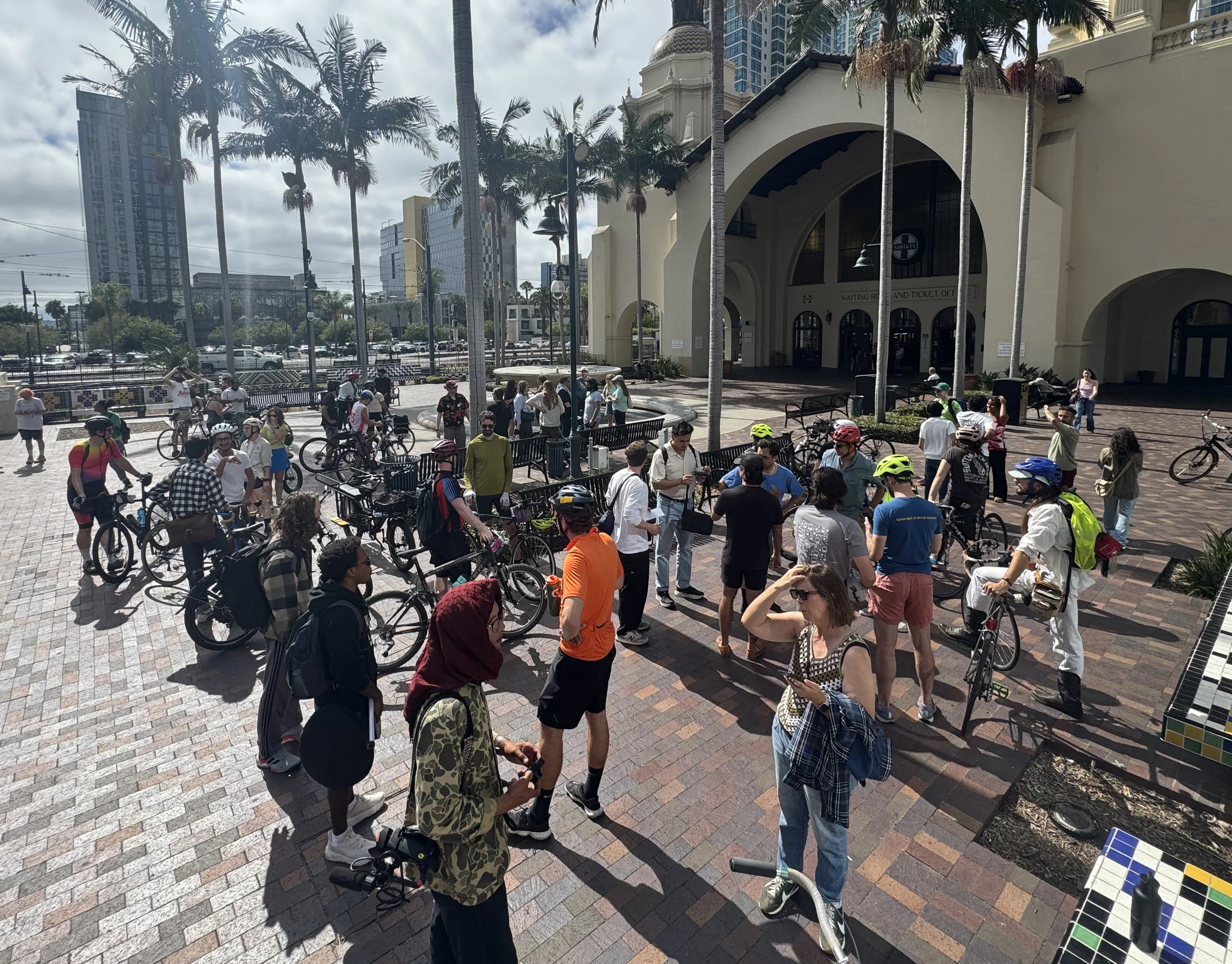
The event “Race the 215” advocated for public transportation support. The cyclists (shown prepping here) won the race when the bus broke down.
Too often, I see criticisms of mutual aid endeavors made in the same tone with which my PSL comrades once castigated it to me: mutual aid is just noble charity which doesn't really turn the dial forward in terms of growing organizational power and is ultimately futile in the face of deeply inequitable and imperial supply chains. However, it is important to understand that the motivation behind this campaign is not to merely patch gaps in the system of distribution. Nor will mutual aid ever be able to outright replace a deeply embedded and globalized supply chain. Rather, the purpose of mutual aid such as these gardens is to cohere a community of individuals around the physical labor of building infrastructure that supports a community’s basic needs. This is an integral aspect of building a meaningful socialist project that proves we have the vision, means, and ability to build novel production and distribution structures that do not perpetuate capitalist-colonialist relations and are organized in common rather than at the direction of capital.
Another similarly effective mutual aid project of the San Diego chapter is our Fix the 215 campaign. The 215 is a local bus line with the highest ridership in the city; beginning at the train station in downtown and terminating at the local state university, it takes about 50 minutes from start to finish for a total of nine miles (and that is if the bus does not break down midway through). Our demands were quite simple: dedicated bus lanes, all door boarding, and bus priority at intersections. The most recent action related to this project was Race the 215, where we partnered with our cyclist and urbanist advocacy partners to facilitate a competition between bicycle riders and the 215 bus line to see which group could finish the route faster. Needless to say, the cyclists won after the bus broke down three stops into the race. The event itself had a tinge of direct action blended into it, but the project of public transportation advocacy more broadly demonstrates a priority for reinforcing and expanding an existing working class community infrastructure that is centered around accessibility and the freedom of movement.
A project such as this, however, will not be completed simply on its merits alone, and we are under no illusions that, by merely documenting significant flaws in the public transportation system and advocating for meaningful solutions, these issues will ever be fixed. We will need buy-in from the elected officials that sit on the governing authority for public transportation, the San Diego Association of Governments (SANDAG), a multi member body made up of elected officials from the City and County of San Diego as well as various periphery cities.
A sustainable socialist project
At the end of the day, we are in the business of politics. That means running candidates, raising money, and winning races. It is unmistakable that DSA is in the shape that it is because we have proven ourselves to be a viable alternative to decades of austerity at the ballot box. But as our comrades in any of the various groupuscules and sectariana will always remind us, the road to electoral victory is paved with opportunists and reformism. Is simply changing the flag flown at city hall to a red rosy handshake actually building a sustainable socialist project?
Working people obviously lead busy lives and mundane political engagement is taxing enough, let alone organizing. Yet, through an Electoralist strategy, reforms can be fought for and won in local institutions that can alleviate some of the burden of our neoliberal hell while also demonstrating the upper ceiling of capitalist reforms (centering this concept in messaging is crucial; there will always be a box that needs breaking out of). Putting your comrade Fran or Ken in charge of the state is only the starter gun for change at the structural level. Once in office, passing policy becomes the flipside of Electoralism that can really make or break its efficacy as a grand strategy. And if the executors of the administrative bureaucracy cannot impose the will of the masses on captured political structures, then those structures prove why they must be altered or abolished. Zohran is not a good mayor because he agrees with me and is the same type of communist as I am: he is a good mayor because he actually uses his position to advance and entrench the interests of his constituents at large. Taking power where we can, then wielding it accordingly is truly the base spirit of this whole cocktail.
The point of engaging in Electoralism is not about taking power for power's sake, it is in order to soften material conditions so that the most politically advanced of the masses can build a holistic movement that includes the work of direct action against defenders of the capitalist order and building the dual power infrastructures that will eventually render the state obsolete. When all three happen at the same time, that is prefiguring. This will occur most literally at the hyper-local level; i.e. organizing a residential building to lower their rent by forming a tenant union and passing a local rent control ordinance through an allied alderperson. Through participation in that struggle, those tenants will have lower rents, giving them more free time, while simultaneously demonstrating that DSA is people who get shit done–and that is better recruitment and development than any list someone could whip up.
A constructive tension
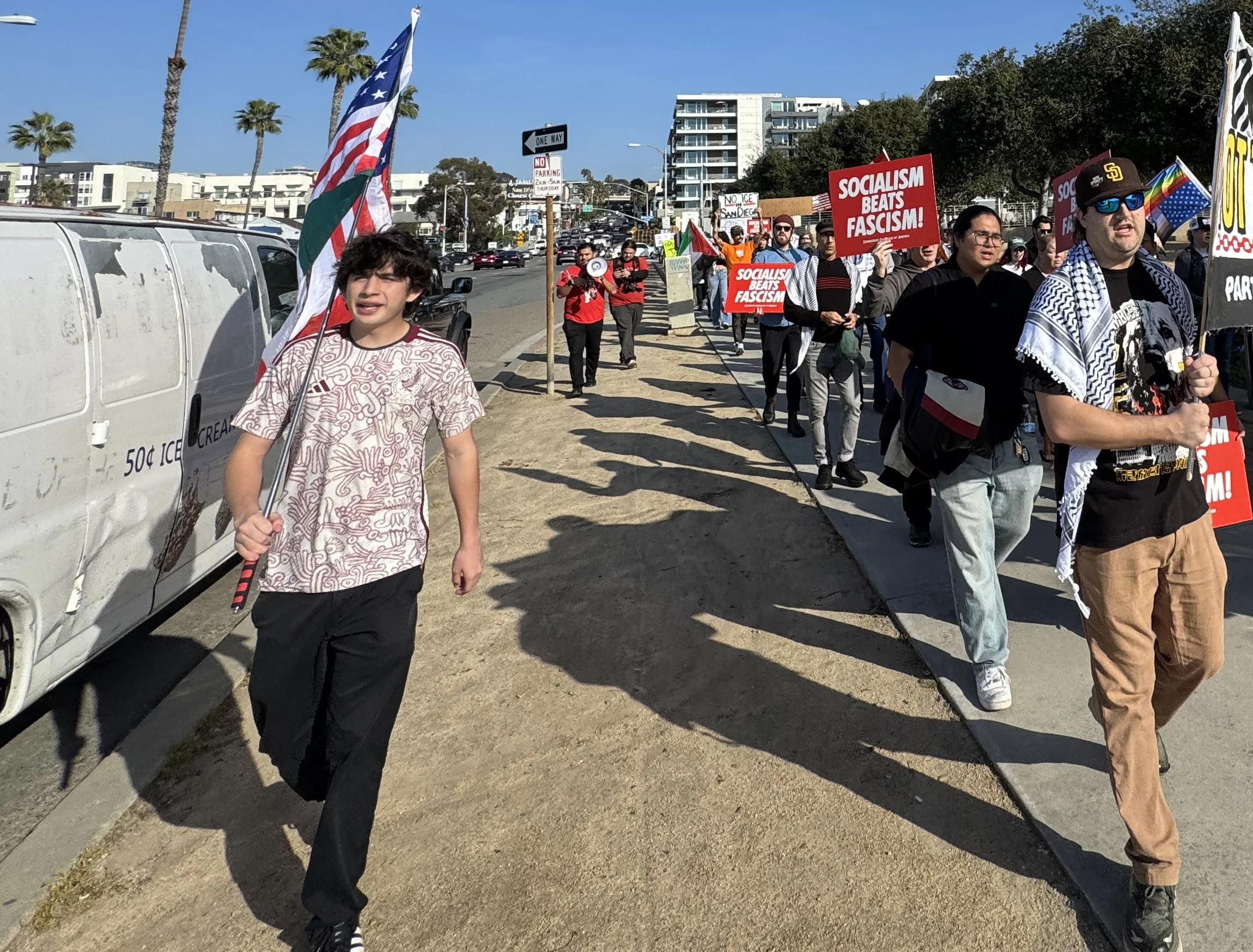
Electoralism also serves as a test of reach and effect. The worst outcome of a solely Direct Action and/or Mutual Aid strategy is organizing oneself into a bubble that is alienated from the masses at large. For better or for worse, ~150m Americans believe that voting is the ultimate form of political participation. If our work is resonating with communities, that should be reflected in every single primary and general election. Voting maps and district research become data points for targeted outreach strategies in support of mutual aid projects that aim to serve communities before, during, and after election day. Getting these projects started early and in election off years demonstrates to a community that DSA is not Johnny Come Latelys, but that we come from and have deep bonds to the communities we wish to represent.
Another holistic aspect to Electoralism is directly related to the attitude of the administrative and elected personnel of the government apparatus who manage the relations of production under which Direct Action and Mutual Aid efforts play out. These electeds can swing favors significantly for grassroots infrastructure initiatives and allow for closer coordination with allied power brokers in negotiations. Even allied elected officials, by nature of their position to the capitalist mode of production, will naturally be restrained by the rigidity of the system, and thus must rely on their organized base to agitate for more concessions from the ruling class and deeper structural reforms. If the state is not capable of satisfying community interests, then its resources can be leveraged to build novel community-based institutions by and for the people.
DSA San Diego, despite our size, is still building up our electoral program and is currently vying for the mayorship in two distinct periphery cities within the county. Each presents unique conditions in the project of building socialism and exciting opportunities for changing the dynamic between citizens and the city, easing the financial burden of existence, and creating novel infrastructure that supports working class liberation. Being in a democratic organization, politics plays out at every level–from chapter organizational priorities to who we endorse for public office. As we build our electoral muscles, the team sports tradition so thoroughly embedded in American politics manifests as an internal tension between two camps: the chapter institutionalists, intent on building a sustainable political machine, and the political firebrands, who see winnable seats as platforms to agitate and disrupt business as usual.
I want to emphasize that I find this tension to be a constructive one. Watching the various camps emerge just within the ecosystem of electoralism has exposed natural leaders and demanded their creativity in deploying organizing tactics that can win the support of chapter membership. The institutionalists remind us that power requires endurance— you can't govern if you can't win. The firebrands, on the other hand, remind us that winning is meaningless if you do not use the platform to build movement power and shift the terms of debate. Both are necessary, as the dialectic of building and agitating plays out in real time. Only time will tell if our comrades ascend to their respective Mayoralties, but, at the very least, the chapter will have gained ambitious new leaders and experienced structural innovation that builds a culture of excitement and progress.
In the end, the left movement in the US is ultimately in a period of strategic fermentation, maturing into the grownup world of congressional primaries and talking head interviews, while trying to maintain an optimistic vision of what a socialist future can be if only we can win the moment in the now. Through a balanced synthesis of these three tactics, the revolutionary cocktail is brewed, but only if united by a holistic strategy that balances the strengths and weaknesses of each component of the concoction. Our task is not to predetermine the lines of development, but to embrace the unity of our work and the necessity of that unity for the most thorough advance of our movement. Without tapping into the essence of elections, mutual aid, and direct action–each of them loses the potency to be genuinely revolutionary.
I'll leave you with this axiom.
If an industry or institution for a service exists, then you unionize it through direct action or capture it electorally; and if the structure does not yet exist, then you build it through mutual aid.
[Reprinted from Geese]