PART TWO OF TWO
[Part One appeared in the September issue of California Red. You can find it here.]
A Communist without a Party
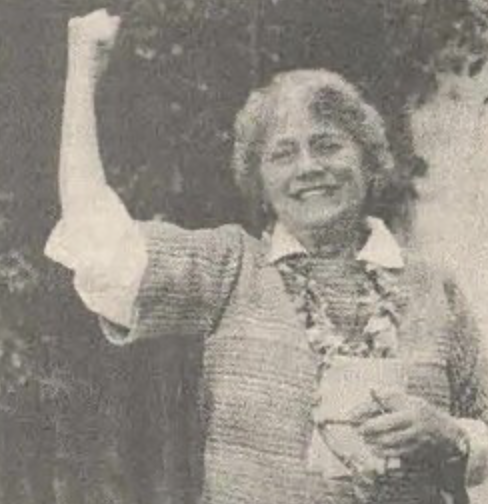
Dorothy Healey
The obvious political path for an ex-Communist in Cold War America led rightward. Healey refused to take it.
She did not reinterpret her radical youth as a prolonged mistake or trade marxism for liberal anticommunism. She remained convinced that capitalism generated exploitation, inequality and war. What had failed was the Communist Party's claim to possess the sole correct road beyond it.
That left Healey in uncertain territory. Los Angeles radicalism in the 1970s no longer revolved around a single institutional pole and instead sprawled across feminism, gay liberation, antiwar politics, Black and Chicano movements, environmentalism, labor organizing, Marxist collectives and an assortment of revolutionary organizations. The old party structure had become untenable, but the movements that replaced it had not produced an obvious successor.
Healey encountered the problem in intensely practical form. She knew dozens of younger Los Angeles radicals who were politically committed but organizationally adrift. In a 1984 interview, she remembered being unable to stand watching them "bobbing along like corks on a stream" without a political home.
So they created one of the best-named organizations in the history of the American left:
Forty Socialists in Search of a Party
The group brought together thirty-nine younger activists and Healey. Some had been Communists, others had belonged to different organizations, and some had never belonged to anything. Eventually they entered the New American Movement together.
The name captured the moment perfectly. Communism as an organization had failed them, but socialism as a project had not.
From Communist Commentary to Marxist Commentary
Healey's radio work now changed with her politics.
By the later 1970s, Pacifica recordings identify her program as Marxist Commentary. The shift in title was small but revealing: Marxism remained, while the Big C party designation disappeared.
The surviving broadcasts give us an unusually intimate record of Healey's post-Communist political world. They show her less as a former party leader reminiscing about the 1930s than as someone actively absorbing the concerns of the 1970s left.
In 1976 she moderated a KPFK discussion on women's liberation and socialist feminism featuring activists from the Berkeley-Oakland Women's Union, Los Angeles New American Movement, Chicago Women's Liberation Union and NAM's Socialist School. A year later she broadcast a Los Angeles NAM forum on psychotherapy and revolutionary politics featuring feminist psychologist Shevy Healey, psychiatrist Terry Kupers and UCLA intellectual historian Russell Jacoby.
In 1978 she interviewed socialist folk singer Malvina Reynolds about labor, nuclear power, feminism, racism, technology and political commitment. In 1979 she interviewed Mimi Conway about efforts to organize textile workers in the South.
The subjects kept widening. Healey produced broadcasts on Nicaragua, Vietnam and Cambodia, Poland and the emergence of independent trade unionism, abortion rights and the New Right, and U.S. policy toward El Salvador.
This was not the political universe of the Communist Party district office.
It was a more pluralist left, intellectually messier and far less centralized. Socialist feminism existed alongside labor politics, personal liberation alongside political economy, Central American solidarity alongside debates over psychotherapy. Healey had lost the organizational certainty of Communism and gained a much wider field of conversation.
Radio became the medium through which that evolution was audible.
The New American Movement
Healey joined the New American Movement in 1974.
NAM had emerged from the New Left with an explicit commitment to democratic socialism and local organizing. It was especially shaped by feminism, gay and lesbian liberation, workplace organizing and the movements generated during the 1960s, while also attracting former Communists who had broken with the CP after 1956 or 1968.
Healey brought something different into that milieu: the institutional memory of the Old Left.
She knew what disciplined socialist organization could accomplish. She had seen organizers build unions among workers considered impossible to organize and had lived through movements that expected members to devote years rather than months to political work. She understood organization not as an abstraction but as the accumulated capacity to hold meetings, train organizers, publish newspapers, raise money, run campaigns and survive defeats.
She also knew exactly how organizational discipline could rot into obedience.
That tension placed Healey near the center of debates within NAM about organization, leadership and political strategy. Contemporary records show her participating in NAM's national leadership by the mid-1970s, while debates over "mass versus cadre" organization and democratic discipline ran through the group.
Healey's position grew from experience rather than nostalgia. The New Left, in her view, had correctly rebelled against the authoritarianism and sclerosis of older socialist organizations. But movements could also dissolve through their inability to sustain institutions.
The question was how to build an organization strong enough to act without creating another church.
Healey later praised DSA precisely because it did not claim what she jokingly called "papal infallibility." No socialist organization, she had concluded, possessed a monopoly on historical truth.
That was a hard-earned political principle.
The Beginning of Something New
By the end of the 1970s, another problem confronted the socialist left.
The great movement upsurge of the 1960s had ebbed. Revolutionary organizations had fractured or shrunk, organized labor was under increasing pressure, and the election of Ronald Reagan in 1980 announced a much harsher political era. NAM itself began confronting the limits of remaining a relatively small organization rooted in the political culture of the New Left.
Meanwhile, Michael Harrington's Democratic Socialist Organizing Committee occupied another portion of the socialist landscape. DSOC was more closely connected to organized labor and the liberal wing of the Democratic Party, and it traced much of its lineage through the old Socialist Party rather than the Communist or New Left traditions.
The two organizations began talking about merger.
Healey was almost the argument for that merger made flesh. She carried the organizational memory of the Communist Old Left into a New Left socialist formation whose leaders included her own son Richard, then helped bring that current into dialogue with socialists descended from a political tradition Communists had once regarded as bitter rivals.
In February 1982, NAM and DSOC merged to create the Democratic Socialists of America. Contemporary DSA material prominently presented Healey as one of the organization's public figures, praising DSA for bringing different socialist generations and traditions together.
She became a national vice-chair.
But treating DSA as the final destination of Healey's political pilgrimage gives the story too tidy an ending. Healey herself had no illusions that the new organization had solved the problems that had consumed the American left for decades.
Asked in 1984 why DSA was the best place for socialists to organize, she gave a wonderfully unsentimental answer: "I don't know of any other place to do it." DSA's virtue was not that it had discovered the correct line; it was that it admitted it might not possess one.
For Healey, that was progress.
Leaving LA
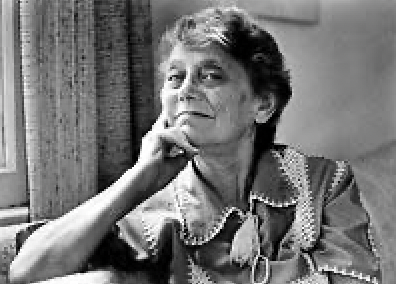
Also Dorothy Healey
In 1983, Dorothy Healey left Los Angeles.
She moved to Washington, D.C., where her son Richard lived, and helped raise her grandchildren. After almost four decades as one of the city's most recognizable radicals, the Red Queen of Los Angeles was gone.
But she did not leave radio.
Healey had been broadcasting on Pacifica in Los Angeles since 1959, and in Washington she and Richard eventually hosted Dialogue, an hour-long public-affairs program on Pacifica station WPFW. The broadcasting career that had begun with a Communist Party leader defending revolutionary politics in Cold War Los Angeles continued into her life as an independent democratic socialist.
The continuity is striking.
For Healey, radio had become something close to a political institution in its own right. Organizations changed around her, but the conversation continued.
"I'm a product of that past"
In 1984, Healey objected sharply to something Michael Harrington had said about former Communists inside DSA.
Harrington had described them as having broken with their political past. Healey would have none of it. "I haven't broken with my past," she replied. "I'm a product of that past."
That sentence may be the key to understanding her.
Healey did not want Stalinism rehabilitated. She had spent years fighting the habits of obedience and political dishonesty it produced inside American Communism. But she refused the Cold War demand that repudiating Stalin required repudiating everything Communists had organized, learned, sacrificed or accomplished.
Los Angeles had taught her why that distinction mattered.
Communists there had participated in union organizing, civil rights struggles, antiwar campaigns and defense of civil liberties. They had built institutions and trained organizers, and some of those organizers became bridges into movements that emerged long after the Communist Party's heyday. The party's authoritarian politics could undermine those accomplishments, but they could not make them disappear.
Healey wanted the socialist left to inherit critically.
That meant preserving organization without preserving obedience, Marxism without dogma, historical memory without nostalgia, and revolutionary ambition without pretending that one organization had been appointed custodian of history.
It was a politics built out of scars.
The long view
Healey returned to Los Angeles in 1990 to promote the memoir she had written with historian Maurice Isserman.
The Soviet bloc was collapsing. Seventeen years had passed since she left the Communist Party and seven since she left Los Angeles, but more than two hundred friends, comrades and supporters gathered at a Brentwood reception to see her. Healey told the Los Angeles Times she still considered herself a communist, now pointedly "with a small 'c.'"
She had outlived Stalin, the Popular Front, McCarthyism, the New Left and nearly the entire political universe that had formed her.
Yet she never adopted the idea that history had settled the argument in capitalism's favor. What had collapsed in Eastern Europe, she maintained, was a particular political system claiming the name socialism, not the possibility of creating a democratic socialist society.
Her conception of socialist politics had nevertheless changed profoundly.
In her 1984 reflections on DSA, Healey argued that radicals needed a much longer sense of political time. One of the valuable things she had learned from the Communist movement, she said, was not to become intoxicated by immediate victories or destroyed by immediate defeats.
She also saw a different role for socialist organization than the Communist Party had once claimed for itself.
The new movements against racism, sexism, militarism and environmental destruction possessed their own autonomy and sources of leadership. Socialists did not need to command them. Their contribution could instead be to understand how apparently separate struggles fit together and help people make those connections.
It was almost the inverse of the old vanguard conception.
The party would not lead history. Socialists would help movements find one another.
After the party
Dorothy Healey died on August 6, 2006, at ninety-one.
By then, almost every political institution that had structured her life existed at the margins of American society. The Communist Party had long since ceased to be a substantial force. DSA survived but remained small, organized labor had undergone decades of retreat, and "socialism" seemed to most political observers a word from another American century.
Healey missed the socialist revival by a decade.
She did not see Bernie Sanders's 2016 campaign introduce democratic socialism to millions of Americans with no memory of the Cold War. She did not see tens of thousands of people join DSA or a new generation of Los Angeles socialists again debate elections, labor, race, housing, coalition politics, organization and the Democratic Party.
But the questions would have been familiar.
How can socialists build durable organization without reproducing bureaucracy? How should electoral work relate to movement building? How do struggles against racial oppression connect to class politics? How can an organization maintain coherence without convincing itself that disagreement is treason?
Healey had spent half a century wrestling with variations of those questions.
From the crisis of 1956 through the upheavals of 1960s Los Angeles, from Communist Commentary to Marxist Commentary, from Forty Socialists in Search of a Party to NAM and DSA, her political evolution was not a march from radicalism toward moderation. It was a decades-long attempt to construct a socialism capable of learning from its own history.
Los Angeles was where much of that transformation occurred.
The city gave Healey one radical world and then watched it collapse. It supplied another generation of movements that forced her to reconsider what socialist politics could be, and it gave her a radio station from which she could work through those questions in public.
For decades, headline writers called Dorothy Healey the "Red Queen of Los Angeles." The phrase was intended to make her sound exotic, dangerous, almost foreign to the city around her. In retrospect, she looks deeply Los Angeles: argumentative, heterogeneous, perpetually reinventing herself, and forever attempting to assemble a coherent politics out of a city that resisted coherence.
Her Communist Party disappeared as a serious force.
The political problems that animated it did not. Neither did all of the people, institutions and accumulated skills that flowed from one generation of the Los Angeles left into the next.
And somewhere in the middle of that history is an image worth keeping.
Dorothy Healey sits behind a microphone at KPFK in July 1973. The organization that had given structure to almost her entire political life is asking her once again to say something she does not believe.
This time, she turns on the microphone and leaves it.