
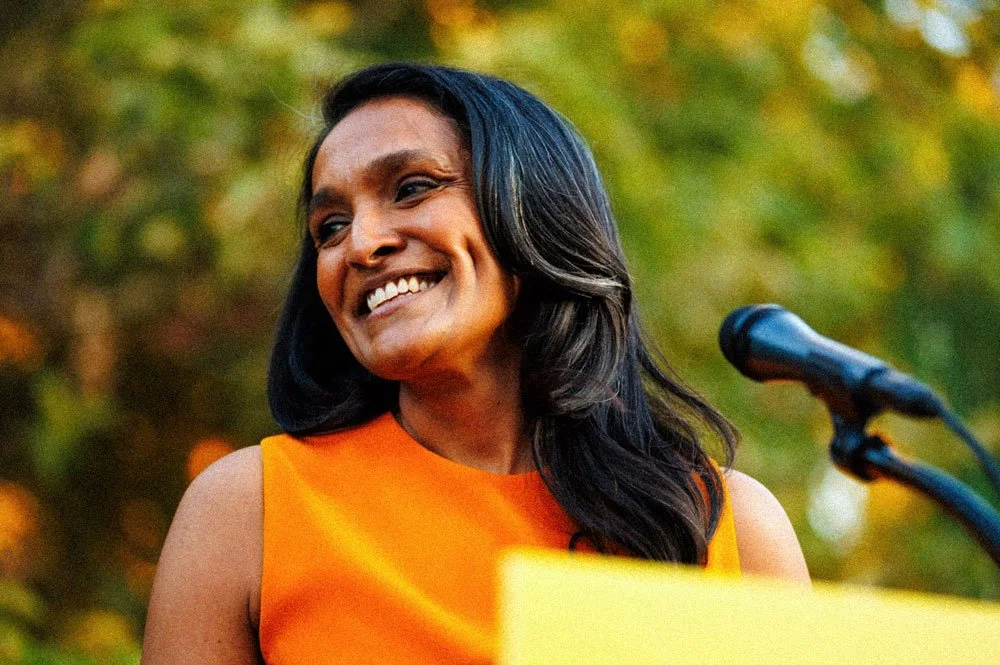
LA Mayor-elect Nithya Raman
“LA was at a critical cusp in its history. Globalization had reorganized its economy, rewiring it in dramatic ways, and many people were being left behind. Yet the city had—and still has—this incredible, protean potential for better things, for progressive politics, for surprising activism.”
– Mike Davis
The midterm elections were truly seismic. Like many places across the country, Los Angeles made good on its protean potential from the 2026 blowout with a stronger socialist movement and a larger share of political power. DSA members won up and down the ballot. Nithya Raman has famously won the mayor’s office of the country’s second largest city in a upset victory. Marissa Roy has won the city attorney’s office, and Angela Gonzales-Torres is headed to Congress.
Together, their victories put democratic socialists in two of Los Angeles’s most powerful citywide offices and send a DSA-LA member to Congress for the very first time in a race that few expected a year ago would even be a close challenge. The formerly conservative, sleepy suburb of Burbank has elected a DSA council majority, the first on the West Coast and one of only two places currently in the country.
Behind those wins is DSA’s second-largest chapter. In the last year alone, the LA chapter doubled its membership to over six thousand members, launched a citywide Shake Up LA slate, and knocked more than 110,000 doors. And it did so alongside a realignment of the city’s left-labor coalition, especially that of the powerful hotel workers union UNITE HERE Local 11, which cross-endorsed most of DSA-LA’s Shake Up City Hall slate from Nithya down to Burbank city council and whose thousands of members knocked doors for her.
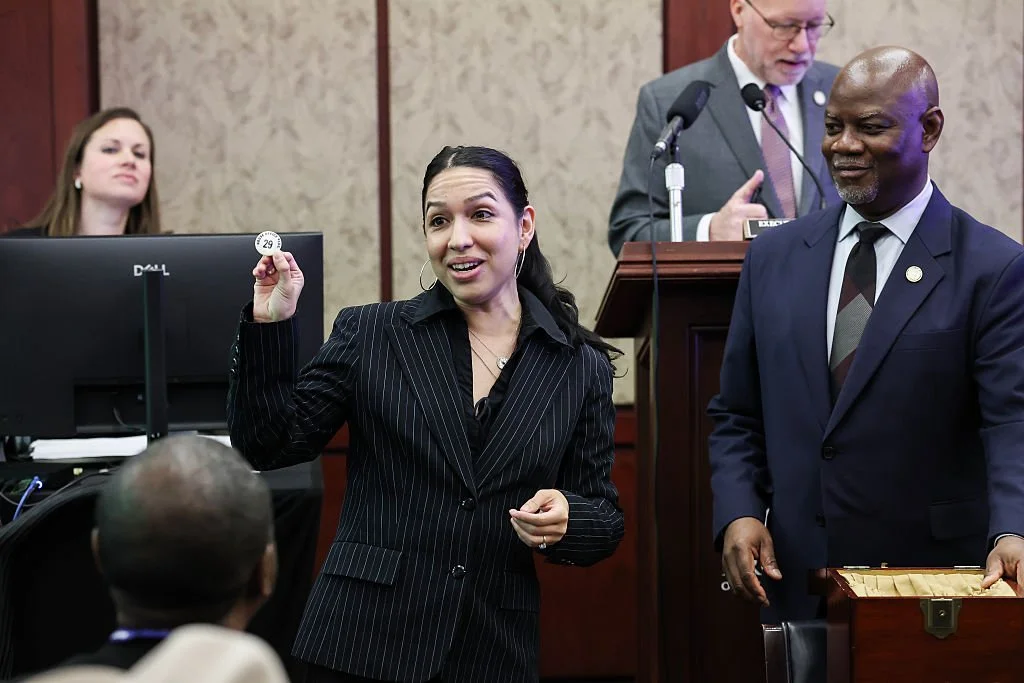
In the midterm elections, democratic socialists won two of Los Angeles’s most powerful citywide offices and sent a socialist to Congress from the city for the very first time, in a race that few expected a year ago would even be a close challenge.
National Earthquake
Of course this didn’t happen in a vacuum. Nationally Democratic candidates of all stripes won control of both chambers of Congress, while Republicans lost ground in a shocking 99 percent of roughly 2,100 counties where most ballots had been counted by Wednesday morning, according to Reuters. The electorate shifted left nearly everywhere, all at once.
Early voter surveys showed the multiracial and generational breadth of that rejection. The AP Voter Poll found that about 90 percent of Black voters, roughly 60 percent of Latino voters, and a whopping 70 percent of voters under 30 supported Democratic House candidates. Tufts University’s CIRCLE research center also reported Democratic majorities among young men and white youth, groups that had favored Trump in 2024.
Within that national revolt, Los Angeles voters were also shifting left. Gonzales-Torres decisively defeated Democratic incumbent Jimmy Gomez, winning 62 percent of the vote while running openly as a DSA member, supporting a free Palestine and the abolition of ICE, and rejecting corporate money. Her victory gives DSA-LA its first foothold in Congress and demonstrates that a candidate can take clear positions against corporate power, state violence, and yes Palestine and the BDS movement while building a winning electoral coalition.
Roy’s victory carries a historic mandate as well. With more than 695,000 votes and 68 percent support she received the largest vote total ever won in a Los Angeles city election at any time, according to her campaign. She campaigned uphill against the Democratic establishment and real estate lobby’s support of the incumbent on turning the City Attorney’s Office into the city’s largest public interest law office: pursuing abusive corporate landlords, enforcing workers’ rights, holding polluters accountable and challenging the Trump administration in court. Alongside Raman’s victory, her election gives DSA-LA its first citywide Los Angeles wins and an opportunity to put substantial public resources behind people confronting powerful interests.
Raman’s mayoral victory expands that opening considerably. Her 2020 City Council victory helped establish DSA-LA as a force in city politics. Six years later, she has defeated incumbent (and one-time New Leftist) Karen Bass to become Los Angeles’s first democratic socialist (and immigrant) mayor. Her victory puts a democratic socialist at the head of the country’s second-largest city, giving the movement a new scale of power to advance housing, tenant protections and public services across Los Angeles. (A continuing ongoing tension will be between her independence as an elected and the co-governance and criticism of both the LA Chapter and in DSA’s national leadership about her level of support for the BDS movement).
The chapter has also consolidated its existing beachhead in LA city council. City Councilmembers Eunisses Hernandez and Hugo Soto Martínez and LAUSD Board Member Rocío Rivas all won reelection. In the Inglewood area, Estefany Castañeda retained her seat on the Centinela Valley Union High School District board, while Yaritza Gonzalez won election to the Inglewood Unified School District board.(Ysabel Hurado, a DSA member, also retained her seat on city council).
Red Burbank
The chapter’s reach also expanded beyond Los Angeles. In Burbank, victories for Mike Van Gorder and Nolan Southerland created a democratic socialist council majority alongside Konstantine Anthony, while Stephen Post won in West Hollywood. Estuardo Mazariegos’s race in Los Angeles’s Ninth Council District remained unresolved as of this writing, with Mazariegos trailing by a mere 87 votes after taking on an opponent backed by major corporate and police-union spending.
The scale of the work behind these campaigns matters. In its largest electoral effort to date, DSA-LA endorsed 13 candidates and mobilized more than 1,700 volunteers to fill over 4,000 canvassing shifts. Its members knocked more than 110,000 doors in chapter-led canvasses. Over the same period since the 2024 election cycle, membership grew from nearly 3,000 to more than 6,000–and has added several hundred new members since Election Day alone.
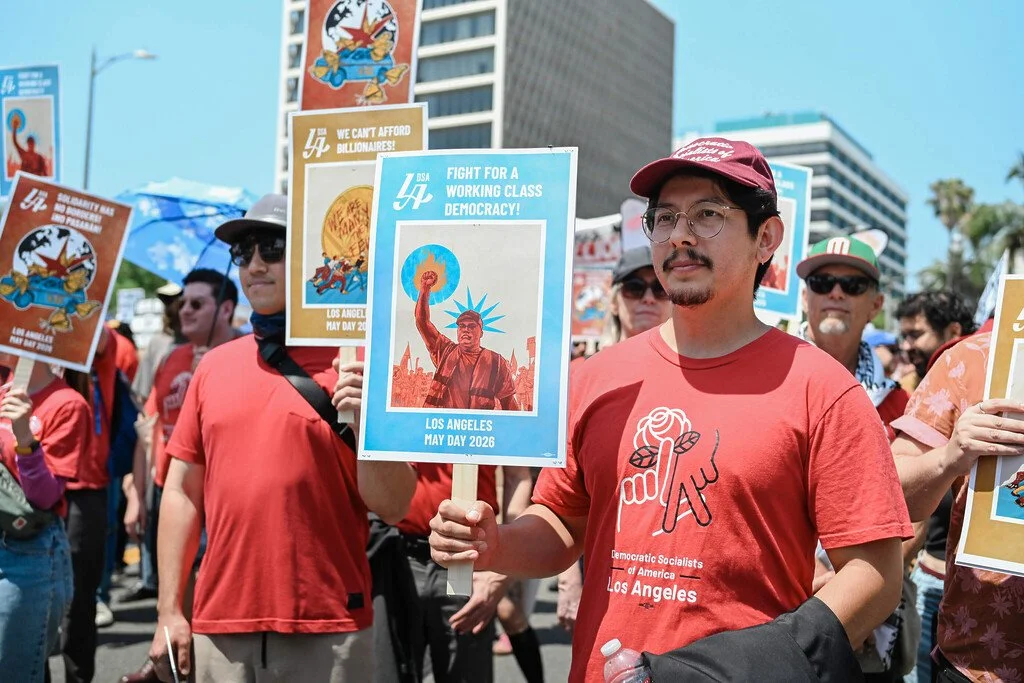
DSA-LA Cochair, Sean Wakasa, at the 2026 May Day rally
The Long Arc
The chapter’s program places this strategy in a longer history of multiracial working-class struggle, from Justice for Janitors in the 1990s to the immigrant rights marches of 2006 and the teachers’ strike of 2019. Those movements demonstrated how organized workers could reshape Los Angeles’s politics and advance demands benefiting the wider public. For today’s socialist movement, that history underscores the importance of maintaining an independent organization capable of keeping workers mobilized, turning electoral gains into power, and holding elected representatives accountable–(a hot button issue with the recent debate and fallout over Nithya Raman.
Combining electoral work, movement activism (from anti-ICE mobilizations to mass transit to Palestine solidarity work) and member growth points toward a way to build durable socialist organization—and power.
“We engage in electoral campaigns not only to change how Angelenos think about politics, but also to emphasize the role everyday people can play in shaping our world”, said Chang. “Our goal is to democratize decision-making and put power back in the hands of working people. The organizing principles that we implemented across the chapter in this past election cycle form the foundation of mass movement building. An endorsement backed by thousands of volunteer shifts creates opportunities to develop new organizers and leaders, forge relationships with neighbors, and bring people into a member-run organization.
She continued: “In turn, the skills our members developed over the last few months can be used to strengthen tenant organizing, labor fights, and to defend immigrant communities. Each election can leave behind a stronger organization capable of taking on larger fights if we remain committed to organizing our fellow working class neighbors into a political program, rather than just mobilizing communities to knock on doors or vote.”
Los Angeles is part of a national advance. DSA reported at least eight members elected to the next House: Gonzales-Torres, Chris Rabb, Darializa Avila-Chevalier, Melat Kiros, Claire Valdez and Donavan McKinney, alongside Alexandria Ocasio-Cortez and Rashida Tlaib. Its election coverage also recorded state legislative wins in Florida and Tennessee. These wins give the socialist movement more opportunities to connect local organizing with struggles over national policy.
There is a wider constituency for that work. Gallup’s September report found that 43 percent of Americans viewed socialism positively, the highest share in its series. In Los Angeles, late-October Berkeley IGS polling put democratic socialist identification at roughly a third of likely city voters. “The democratic socialist constituency is real, and it is growing,” said DSA-LA co-chairs Leslie Chang and Sean Wakasa.
The political lesson is that economic demands and solidarity can reinforce each other. Rent, healthcare and wages are central concerns for a working class whose members also face deportation, racism, and attacks on their rights. Workers feel increasingly powerless both inside and outside the workplace. “Workers have been starting to feel that their ability to democratize their voice in everyday decisions such as employment, healthcare, land use, AI & data centers, etc.) are slipping more and more”, said Sean A, a DSA-LA member active in the campaign cycle. “Demands are made and no one listened--until now. This election represents a mandate to return a democratic voice to the working class.”
The Promise
Gonzales-Torres’s campaign offers a concrete example of how working class politics can be winning politics. Said Sebastian, another DSA-LA member and a super volunteer on the campaign: “This was my first time going out to canvass–much less lead a canvass–for a candidate. Before I met her, everyone would tell me how when you talk to her, it’s not like talking to some politician. We had some great discussions about issues in our community, and she really inspired me to pursue more leadership roles!”
The national results alone cannot settle every argument about which message or strategy worked best. They do, however, create an opening for a left that offers more winning, confronts concentrated wealth, and refuses to sacrifice solidarity for supposed electoral advantage. DSA-LA’s experience shows what sustained organization can bring to that opening.
The next test will be whether these victories open up more struggles and, most of all, change people’s lives. Roy’s promised enforcement agenda, a stronger socialist presence on city council and Raman’s incoming mayoral administration create openings. Those gains though as always will require organized pressure, alliances with unions and community groups, and members willing to remain involved in the difficult work of governing.
They will also take sustained and coordinated pushing and accountability from movements and DSA locally.
The promise of the democratic road to socialism is that working people can collectively govern the institutions that shape their lives. In Los Angeles, that promise now has more members, more organizers, and more elected Socialists in Office behind it. The work ahead is to use those gains to keep moving out to the horizon.
A version of this story appeared in Jacobin. Reprinted by permission.