
State of Play: Electoral Strategy in Los Angeles (Part 2 of 2)
In Part I we described the mainstream political landscape of Los Angeles, the large scale and the major constituencies of the single-party Status Quo Coalition: a wing of wealthy corporate and business Democrats in an uneasy coalition with multiracial liberal democracy blocs of non-profits, labor organizations, and ethnic interest groups. Since publication, another dramatic series of events has shaken up the 2026 Mayoral race in Los Angeles. Center-left Austin Beutner is out of the race following the death of his daughter, while a shocking last-minute announcement from Councilmember Nithya Raman has introduced a new set of challenges for Los Angeles’s DSA chapter to reckon with, sparking hot debate within the membership about the nature of the chapter’s relationship with endorsed Socialists in Office (SIOs). The media comparisons to Zohran Mamdani have only intensified, but the differences between both the candidates and their local political contexts remain stark enough for LA Times columnist Gustavo Arellano to take note.
To help make sense of the moment, we will describe how DSA-LA’s endorsements have evolved in response to the local factors sketched in Part I, and how our victories have in turn begun to reshape that political landscape. DSA’s 2025 National Convention resolutions defined an ideal-but-not-exclusive candidate archetype: the “cadre candidate.” We include some evaluation of our endorsees’ relationships with the LA chapter, as this concept looms large in the post-Zohran DSA environment and colors many chapter activists’ perspective on endorsements. We start with a brief history of the chapter’s electoral endorsements since 2020.
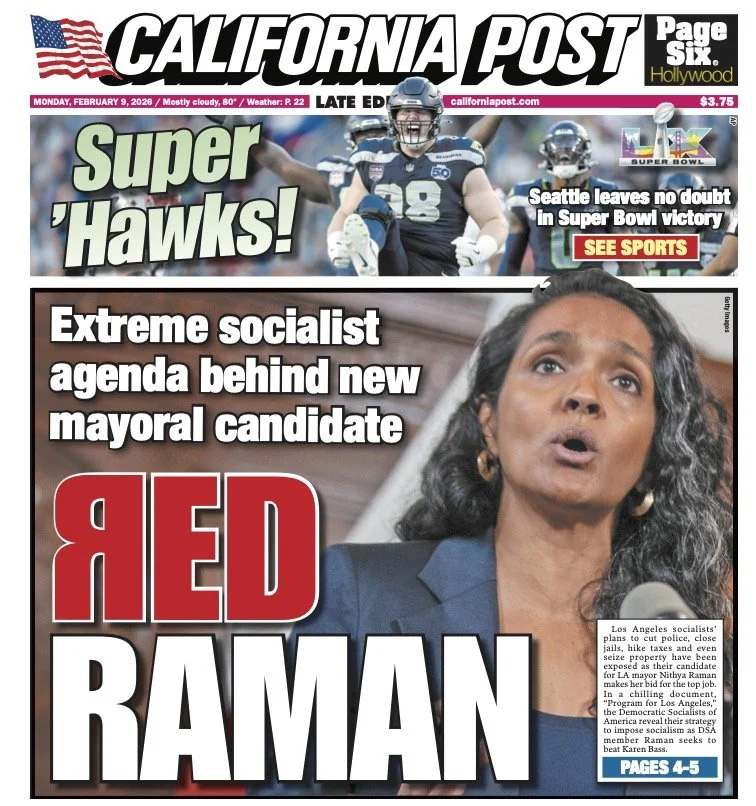
The New York Post’s new West Coast outlet does its thing.
2020
Nithya Raman was modern DSA-LA’s first endorsement for LA City Council, running a 2020 campaign that centered on the city’s wasteful and cruel approach to homeless sweeps and opposing the power of organized landlords. For Los Angeles, Raman was a transformational candidate, the first to unseat an incumbent in a generation.
Far from a core or “cadre” member, Raman only joined DSA in the leadup to her campaign, and has never been an organizer within the chapter’s ranks. Rather, she joined DSA after co-founding the SELAH Neighborhood Homelessness Coalition. At the time, DSA-LA was organizing across renters and unhoused tenants and against the inhumane policies of the city through campaigns like Street Watch LA and Services not Sweeps. Raman’s campaign was backed by the Services Not Sweeps Coalition that included both DSA-LA and SELAH. Though the vote was contested, her campaign received endorsement from DSA-LA and National DSA, and the chapter ran a robust member campaign in support – but notably, never represented a majority or even a plurality of her grassroots volunteer campaign.
Councilmember Raman’s relationship with DSA-LA, and indeed the broader Angeleno grassroots left, has been strained. At the time of her victory, Raman had made no explicit commitment to ongoing engagement (often referred to as co-governance) with DSA-LA — and no Socialists in Office program yet existed within the chapter to enable such ongoing engagement. Though Raman was consistent in her support for renter protections and a humane homelessness policy, she still shies away from adopting the “democratic socialist” label, and her relationship with the chapter almost broke in 2024 when membership approved a censure over accepting an endorsement from a small pro-Israel Democratic club during her hard-fought reelection campaign.
Regardless of these tensions, the impact of her win on the electoral landscape in Los Angeles is undeniable. Despite the entirety of the Status Quo Coalition (including late interventions by Hillary Clinton and Nancy Pelosi) supporting her opponent, Raman’s election began to hint at the electoral influence of the new DSA core constituency: young, multiracial, low and middle-income renters dissatisfied with the city’s neoliberal status quo. That such a constituency could organize and seriously disrupt the city’s comfy electoral order set off alarms among LA’s established powers.
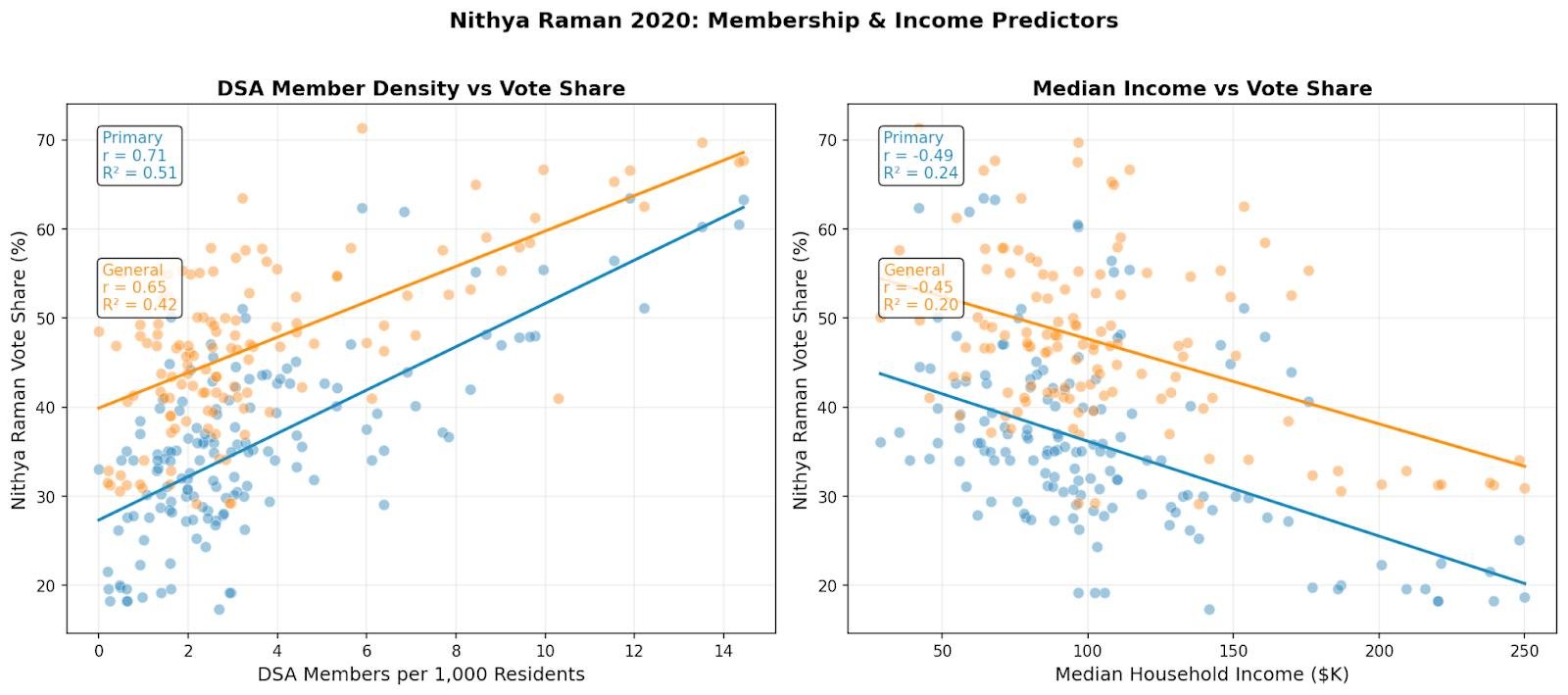
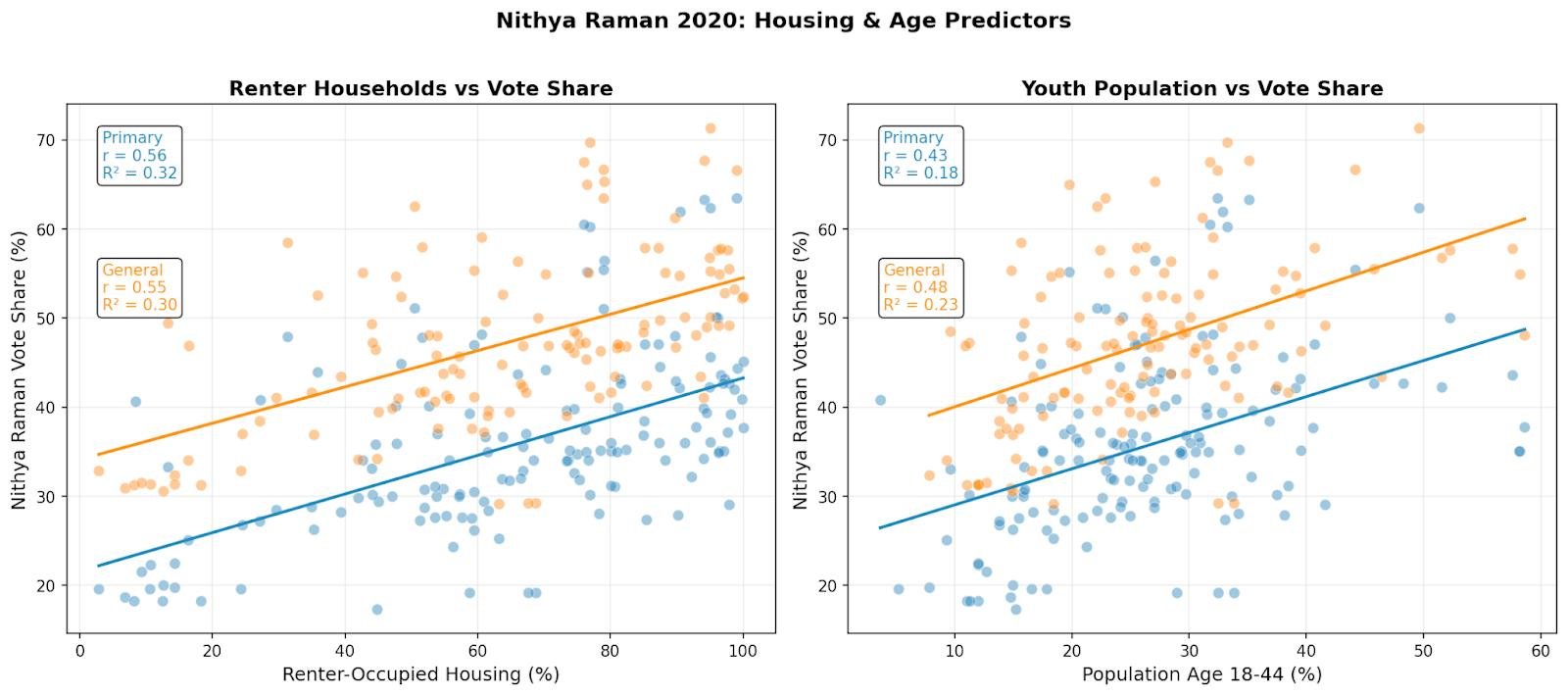
Data analysis by Tal L
2022
The impact of the new democratic socialist constituency roared into full force when two new DSA-endorsed candidates, directly inspired and endorsed by Raman, defeated incumbents from LA’s multiracial liberal democracy blocs.
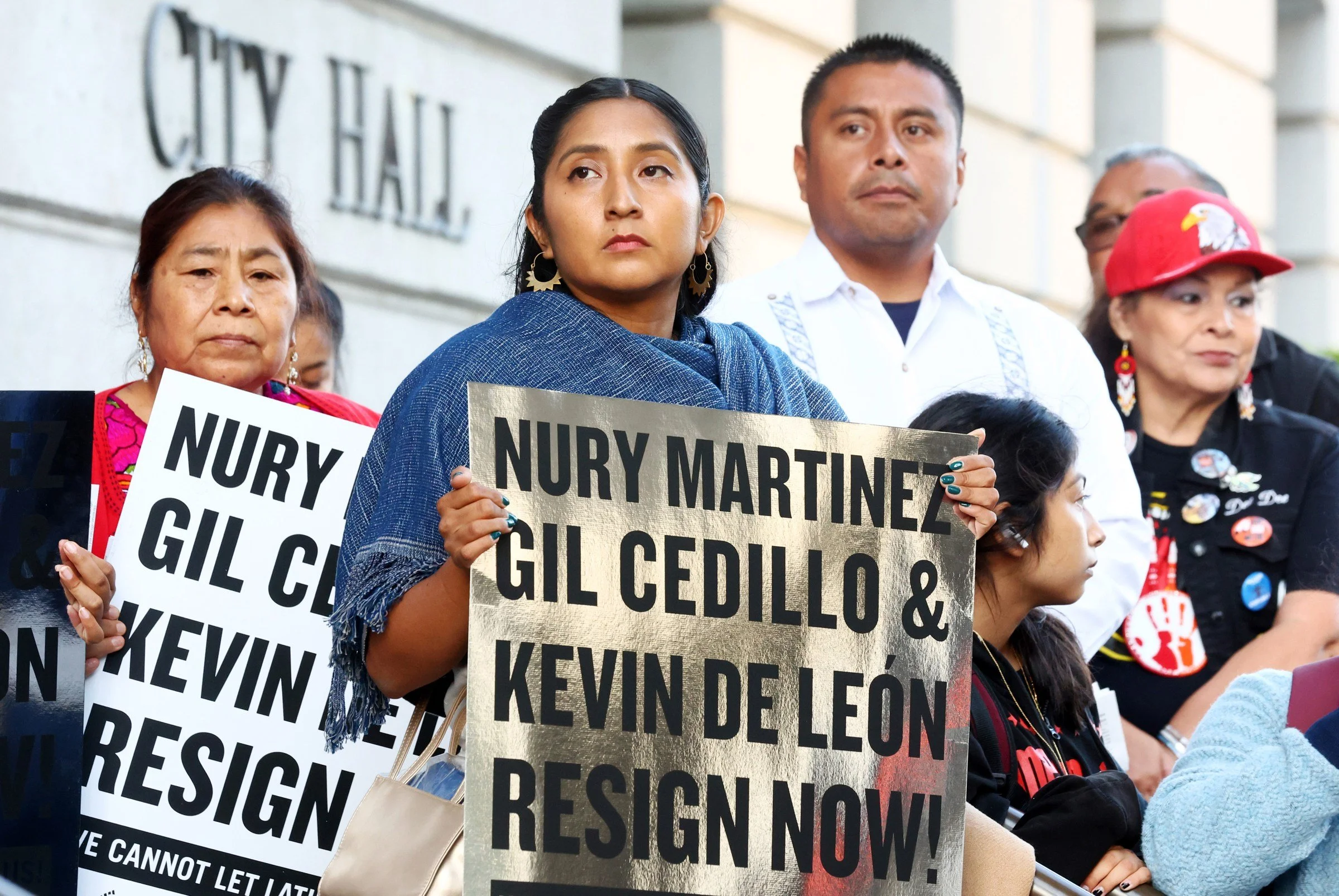
In 2022, Eunisses Hernandez unseated former Latino-labor stalwart incumbent Gil Cedillo in Council District 1, a rapidly-gentrifying district containing Highland Park, a neighborhood friendly to socialist candidates. Cedillo’s history as a labor leader with SEIU and a champion for undocumented immigrants in the State Assembly had established him firmly on the labor edge of the Status Quo Coalition. His city council tenure demonstrated clearly the compromises and contradictions of his Latino liberal bloc – its flexibility to become an early endorser of Bernie Sanders in 2016 while simultaneously embracing support from real estate and business interests.
Hernandez was also decidedly not DSA cadre, joining the chapter during the endorsement process and with a background in anti-carceral political advocacy, the founder and former director of abolitionist nonprofit La Defensa. In office, she has been among the most outspoken members of the socialist bloc, and has organized in office extensively with the chapter in her district.
Hugo Soto-Martinez, representing Los Angeles’ socialist hotbed neighborhoods in Echo Park and Silver Lake, is the clearest LA example of a cadre candidate. From 2018 until his campaign launch, he organized within DSA-LA in the chapter’s NOlympics campaign, and then its Central Branch as a pandemic-era neighborhood organizer. Council District 13 office staff are active DSA-LA members in the central branch, and a burgeoning district committee is taking shape in CD13 to enable mass engagement among constituents. Importantly, Hugo was politicized in and maintains his primary political home in Los Angeles’ labor movement, particularly UNITE HERE Local 11, a fixture of LA’s powerful immigrant-led service and hospitality union sector with a long history of involvement in municipal politics.
The elections of Soto-Martinez and Hernandez coincided with the LA Fed Tapes leak and signaled a shift in the Status Quo Coalition. Soto-Martinez’s deep labor connections allowed him to win endorsements from a significant portion of Los Angeles’ strongly-incumbent-preferring labor federation. Hernandez’s ties to the broad anti-carceral and abolitionist nonprofit world solidified opposition to police funding as a core value of the newly forming political bloc, which has been repeatedly outvoted on questions to expand LAPD. DSA-LA’s non-electoral campaigns in support of workers, immigrants, and renters are increasingly co-organized with LA’s unions, while organized socialists grow in number and organization among some of labor’s rank and file. Los Angeles’ status quo coalition has begun to slowly reshape itself: DSA and the progressive edge of Los Angeles labor and justice-based nonprofit worlds are coming into connection, and police, landlord, and commercial interests are cleaving in reaction. It remains to be seen how durable or consistently ideological this realignment and its associated movement connections are.

Former LA Federation of Labor president Ron Herrera caught on tape.
2024
By the end of 2023, DSA-LA had to confront the limits of organizing a candidate as loosely aligned as Nithya Raman. Both a censure and revoking her endorsement were put to a chapter vote, with 60% of votes cast approving the censure, and 40% in favor of revoking the endorsement altogether. The endorsement stood, the chapter mobilized a field campaign, and Raman squeaked out a 50% win in the primary round, avoiding a runoff against LA Police Protective League and landlord backed challenger Ethan Weaver.
Additional endorsements in this cycle focused on spurring growth in the chapter’s San Fernando valley branch: longtime chapter member Konstantine Anthony, who cruised to victory as an incumbent on Burbank city council, and the unsuccessful runs at Burbank and LA council seats for Mike Van Gorder and Jillian Burgos.
2024’s general election added Ysabel Jurado to the city council bloc, a tenant attorney who replaced disgraced labor figure Kevin de León. Jurado, who spent two years as an organizer with DSA-LA’s Power Mass Transit campaign leading into her campaign for office, notably received the support of the LA Fed. It was a startling turnaround for de León, who was previously a poster child for the Eastside ethnically Latino Labor-supported Status Quo Coalition. But mainstream Democrats all the way up to Joe Biden had called on Kevin de León to step down in the wake of the leak; de León responded by not only remaining in his seat, but seeking reelection. The optics of the moment were surely clear to the Fed, and Jurado became the first DSA-LA member in the modern era to secure their powerful endorsement.
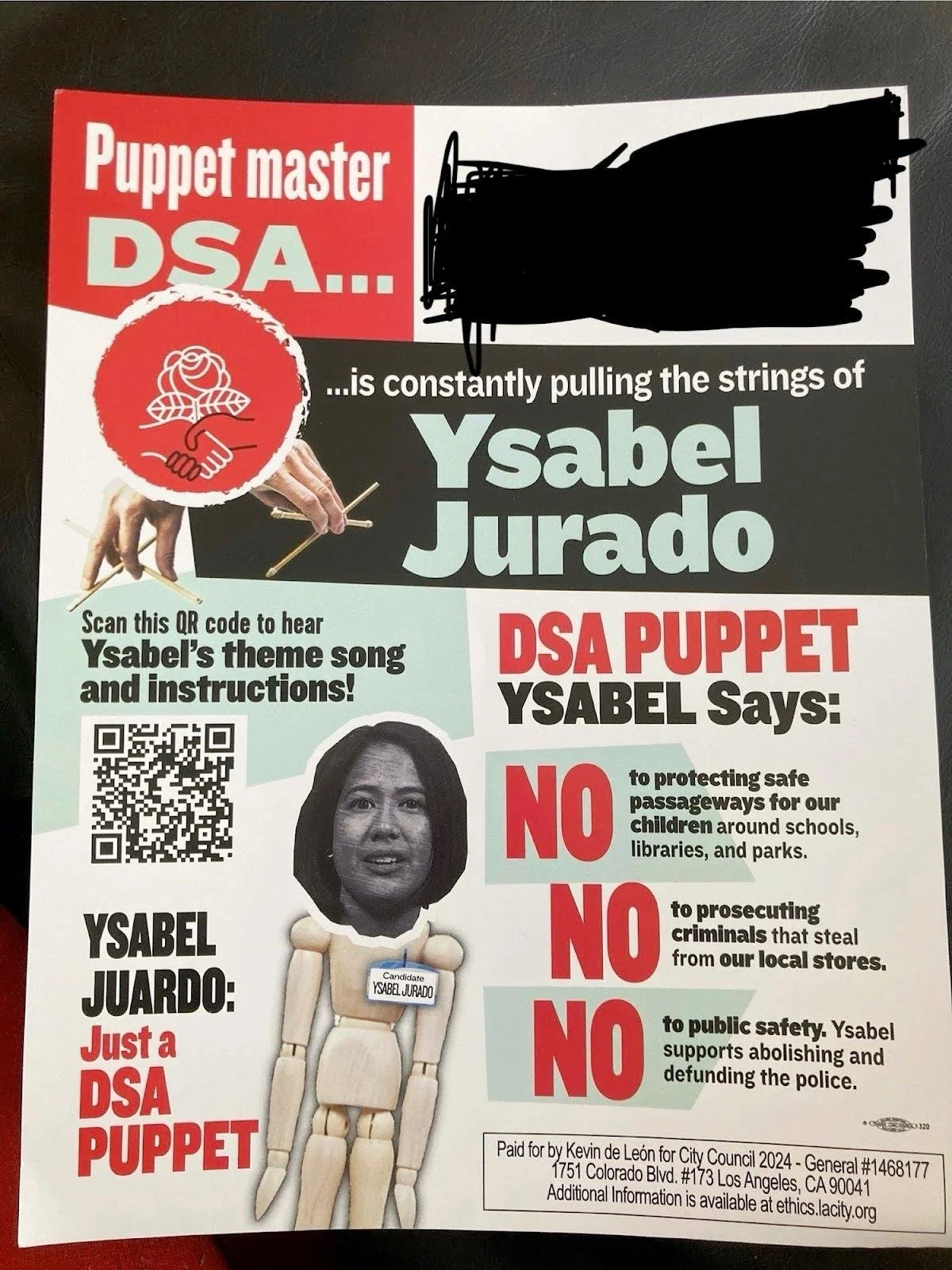
A 2024 election mailer paid for by Kevin de León.
The four-person bloc of Socialists in Office has achieved policy wins, most recently leading the way for city council to respond to years of organized pressure by the Keep LA Housed coalition. Tenants in rent-stabilized housing have won significant relief from exorbitant rent increases for the first time in 40 years, as well as codified anti-harassment provisions. A focus on services over sweeping encampments has shown promise in lowering the horrific rate of unsheltered homelessness in the city, though the scale of the problem remains overwhelming, and the economic outlook under Trump increasingly bleak. Major labor-backed initiatives to increase wages for tourism workers were passed over fierce opposition from LA’s tourism industry. The socialist bloc can often win alignment from progressive council members, but sometimes functions as a distinct minority that takes dissenting or protest votes, particularly regarding police funding.
This alone is a departure from norms in city government. Since at least the early 2000s in the wake of Los Angeles’ last charter reform, Los Angeles City Council established an ever-growing culture of consensus, under which items were only brought to a vote once they had overwhelming support. Under Council President Herb Wesson prior to Nithya Raman being seated, council consistently held a 99.9% unanimous vote rate. Though these habits are beginning to break, the expectations of “executive consensus” among LA’s “mini-mayors” remains a source of conflict between movements and their candidates.
2026
In the 2026 endorsement cycle, new candidates resemble the mix of longtime DSA organizers and movement allies that characterize NYC-DSA’s endorsed candidates. Challenging Los Angeles’ most conservative incumbent in Council District 11, Faizah Malik is public policy attorney for progressive policy shop Public Counsel, and like Raman and Hernandez, joined DSA-LA as a part of her preparation to run for office.
Estuardo Mazariegos, running against termed-out councilmember Curren Price’s hand-picked successor in Los Angeles’ most impoverished District 9, is a director in the community organizing, base-building NGO Alliance of Californians for Community Empowerment (ACCE). A member since mid-2020, he served for a time as a coordinator for DSA-LA’s South Central-Inglewood branch. These two candidates were both leaders on behalf of their employers in the successful Los Angeles rent stabilization campaign alongside DSA-LA, building trust and goodwill.
Marissa Roy, our endorsed candidate for city attorney, may have the tightest links with the chapter: a member since 2021, she strengthened her organizing skills through leadership in electoral working groups, while also being a regular participant in DSA’s political decision-making. Roy is also involved in various non-socialist political organizations around Los Angeles – most notably the Working Families Party (WFP), but also including the circuit of Democratic Party clubs and progressive Democrat-affiliated political organizations like the California Women’s List. On the strength of her legal career, which kicked off with campaigns to end worker misclassification and wage theft in the Port of Los Angeles, Roy has secured endorsement from the LA Fed, as has Faizah Malik.
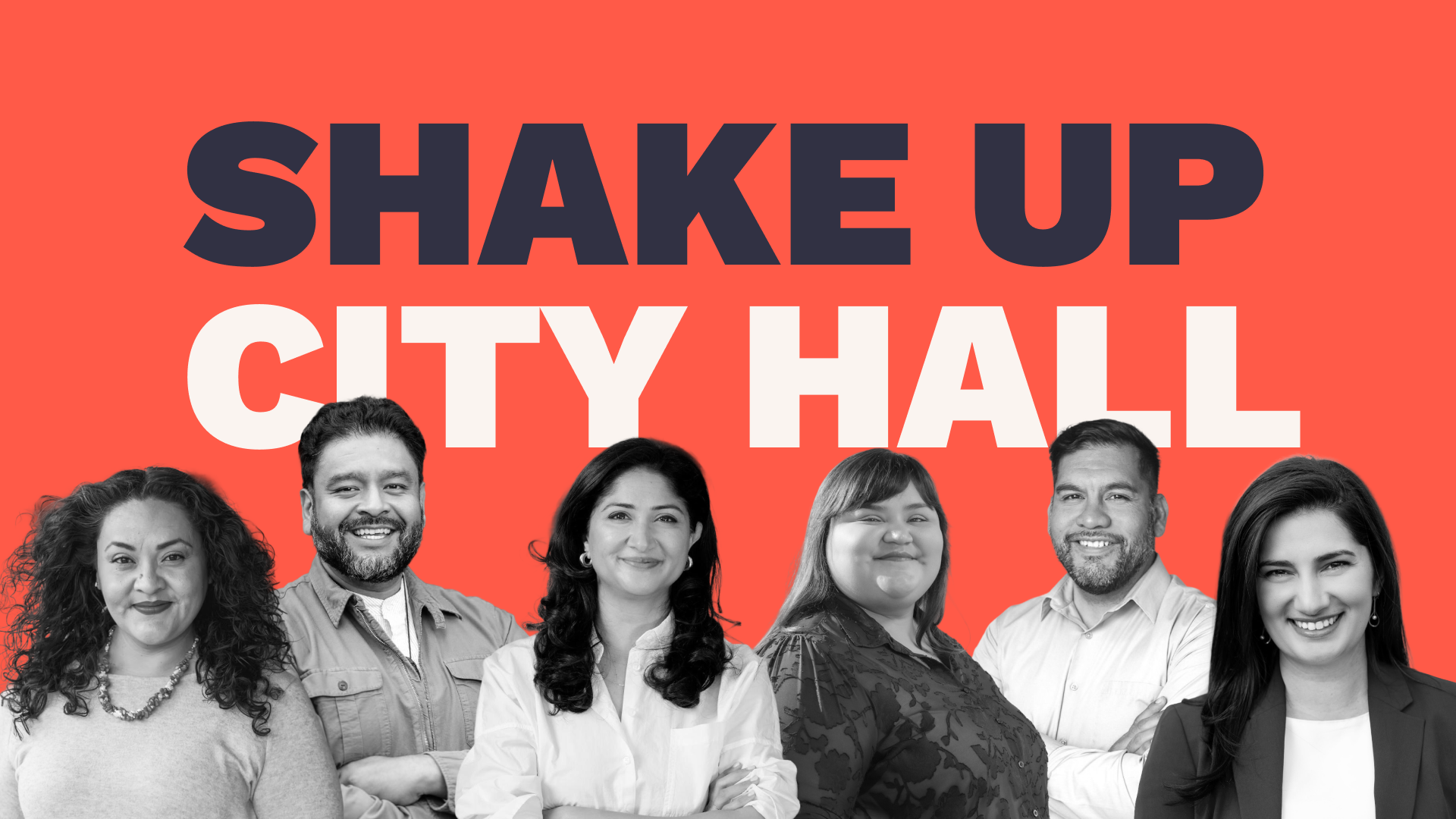
DSA-LA’s slate of endorsed candidates: Dr. Rocio Rivas for School Board District 2, Estuardo Mazariegos for CD9, Faizah Malik for CD11, Eunisses Hernandez for CD1, Hugo Soto-Martinez for CD13, and Marissa Roy for City Attorney.
If the increasing willingness of Los Angeles Labor to support democratic socialist candidates for municipal office heralds a realignment of LA’s historic powers further towards a politics of class— of tenants and workers against landlords and bosses— this realignment is ongoing and incomplete, with Estuardo Mazariegos splitting labor support in his race with two other challengers. It has also triggered a backlash. Los Angeles’ business associations, typified by the anti-DSA PAC “Thrive LA”, has singled out Eunisses Hernandez as their top target this cycle, while drafting another business challenger to Hugo Soto-Martinez, forcing DSA to split our resources in defending multiple candidates. But in response, labor at large is backing a massive independent expenditure to support the re-election of Eunisses Hernandez as well as the insurgent Faizah campaign.
A left-labor political pole
To date, conditions in Los Angeles have incentivized a focus on LA city council rather than state legislative seats. The imperative to win those seats has primarily surfaced candidates who sit at the intersections of DSA with other elements of Los Angeles’ existing movement and progressive networks. The significant power of LA’s council seats has allowed DSA-backed council offices to win major policy victories, while also complicating messaging as movement and candidates try to build shared inside-outside tactics and strategies, with all the contradictions that effort entails. These victories have brought DSA-LA increasingly into alignment with the left wing of organized labor and Los Angeles’ robust nonprofit sector, aiming to sow the seeds of a left-labor political pole mobilized against Los Angeles’ committed capitalist interests.
Of course, winning a campaign is only the very beginning for a socialist in office— everything changes when an upstart “outsider” begins to experience the pressures of the “inside”. This has profound implications for organizers, as winning powerful positions with outsider candidates cannot be decoupled from the practice of political coordination, democratic decision-making, and an empowered chapter membership actively engaged in the institutions of civil society. Our core belief is not in any given candidate, but in the transformative power of a democratic socialist organization – one that emphasizes a deep commitment to the twin goals of member political education and member democracy.
In our next piece, we will do a closer examination of key players and electoral strategies among DSA and the Angeleno left, as well as the challenges facing DSA-LA as the organization navigates governance and mass organizing in the newly-forming left-labor political landscape.