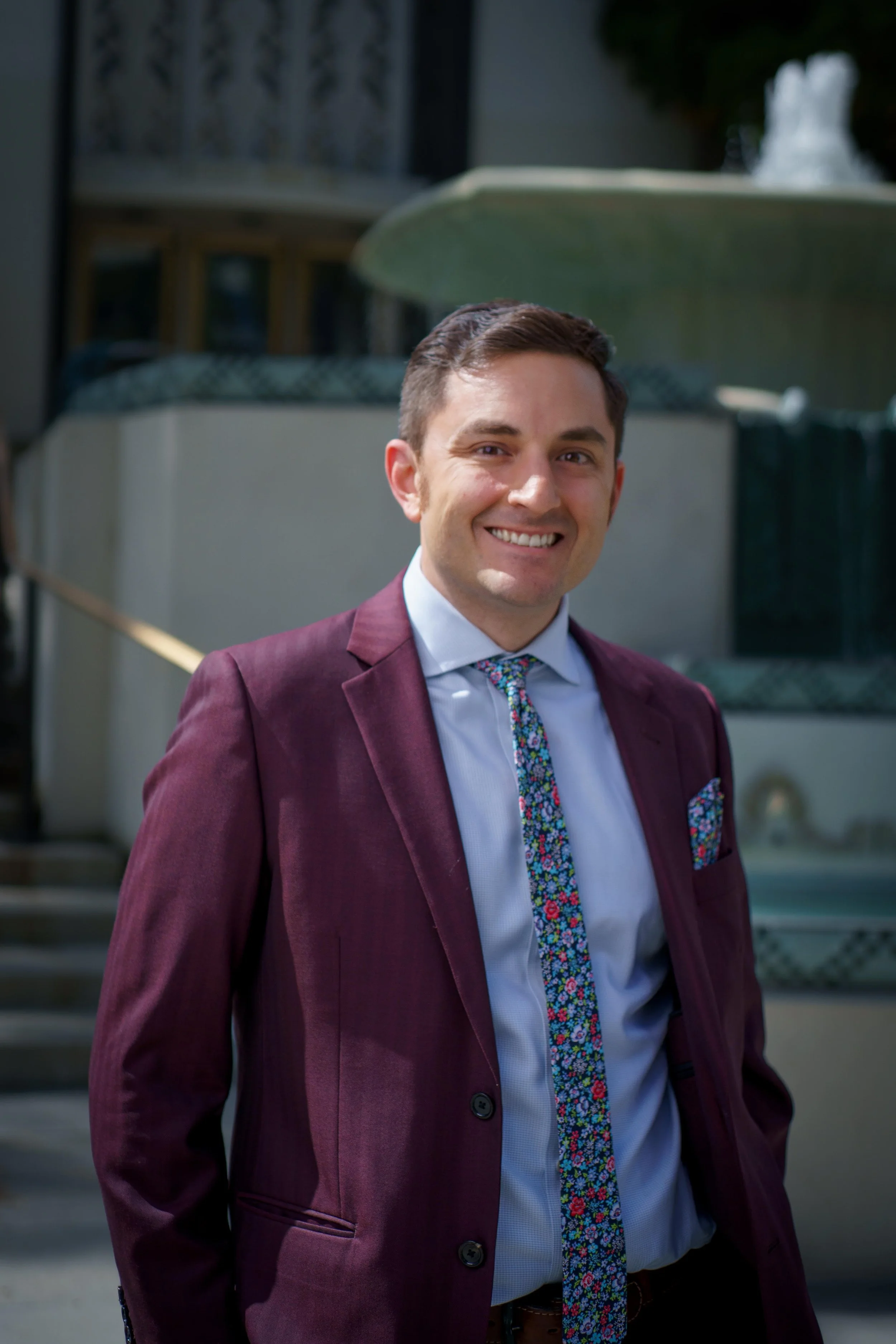
Councilmember Van Gorder
I take a lot of pride in being a loser. Being a Bernie Sanders supporter will do that to a person: Taking the high road again and again, watching the world get worse, you develop a certain noble toughness. We kept losing, but, hell, we kept our integrity, and we had each other – our one real comfort as entrenched powers kept telling us that our priorities were unreasonable, impossible, or that it just wasn’t the right time. Let the powers that be moderate, we were told. They’d won, after all, so they should know better. Right?
And then, of course, when the powerful lost, they blamed the powerless. They couldn’t process their losses. But I always want to embrace my losses, because losing builds character, as the insufferable Dad in Calvin and Hobbes would say.
My losing streak officially ended with the rest of the Great Blue Tsunami of ’26 — I was one of three progressives and two democratic socialists elected to the Burbank City Council. We will be joining one conservative and one fellow democratic socialist, making Burbank the first majority DSA city council in American history, and one of the first majority socialist councils since Wisconsin’s Sewer Socialists in the early twentieth century.*
The path
There are a lot of paths toward the kind of sweeping victory that we’ve just earned, but I can only speak to two: one that I lived, and the other that I watched. My path started in 2017. On Inauguration Day, having processed the shock of a racist game-show host being handed the nuclear football, I decided to make a run at local office with zero resources. If this idiot could do it, then maybe I could, too?
Nope. I came in eighth. But I took the connections that I made and founded a tenants’ union in my city. I was alone in attending literally every meeting, and we launched two voter-led initiatives for rent control. Neither succeeded — voter-led initiatives are cartoonishly biased towards moneyed interests, a curse be upon Howard Jarvis and his Smaug-like acolytes. After those failures, a friend asked for help getting a tenants’ union set up in a neighboring city.
While I was earning a master’s in housing, that friend, Konstantine Anthony, won a record number of votes in 2020 and became the first democratic socialist elected to his city council. Four years, two kids, a new home in Burbank and a profound financial crisis later, Konstantine asked me to run alongside him as he campaigned for reelection. It was a presidential election year, so the turnout would be high, and that invariably favors progressive candidates, right? Wrong again. He got reelected — I came in fourth. I got calls from folks, institutional types, saying, “You need to run again. Stay public.” They hadn’t backed my ’24 bid, but they saw me knock 3,700 doors and knew my work ethic. I’d built a reputation for consistency. There’s only one way to do that, and it’s being consistent.
Staying public wasn’t hard as the federal cruelty machine kicked into high gear. I watched the opposition leaders sit on their hands as hairdressers and restauranteurs were abducted and trafficked to foreign gulags. “What can we do?” the opposition leaders shrugged. “We have no power.” Nature abhors a vacuum, and the absence of a political response from elected officials prompted a popular response.
I mentioned the official end of my losing streak being my recent election, but the unofficial end was when the fascist-profiteering airline Avelo made the mistake of relocating its family-friendly hub to Burbank Airport. Using the public profile I’d built during my losing ’24 campaign, I set up one of two weekly protests (neither of us being aware of the other, ironically enough), and in less than three months, the airline bailed not only from Burbank but the entire west coast. Then Jimmy Kimmel hurt Trump’s feelings in September and the Diaper King had Kimmel’s show pulled off the air. I called for a protest on Wednesday night at 9 p.m., and at noon the following day, three hundred people met me outside the gates of Disney to defend free speech. It took less than a week for the government to fold.
And there you have it — the first successful action against the President of the United States during his horrific second term. The fight had come not from supposed opposition leaders in Washington, but from Burbank’s grassroots. People talk about Kimmel’s defense as the turning point in the second Trump presidency. (And for me, two wins. Something was changing.)
Anti-ICE organizing
All the while, ICE fascism terrorized our communities. I volunteered with the local rapid response network, building a social following by reporting on their movements. The cruelty was astonishing — a raid at the Children’s Refugee Center during a food drive remains the low point — and people started reaching out to me to ask how they could get involved. The organizing moves I had been making for a decade went from earning a few dozen reactions to tens of thousands. Know-Your-Rights clinics and workshops were full, anti-ICE patrols circulated daily, and ICE abductions were met with a furious public within minutes.
I’ve spent my adulthood trying to get people to care about the things that I care about, but caring is tough when self-preservation comes at the cost of isolation. But the naked depravity of the second Trump presidency roused a critical mass of people into collective action. People reclaimed some of their power and directed it to the defense of their communities and themselves.
In the middle of that surge of energy, I pulled the trigger on my ’26 campaign. There were three seats being contested, and one of the incumbents chose not to run. I felt like a frontrunner immediately — I had the institutional support that I lacked in the previous campaign, along with two straight years of constant public engagement. I knew the grassroots support was there for me, but I was in for a surprise: a second candidate had been drafted from the grassroots and put up for council.
The Burbank Tenants Union had asked DSA organizer Nolan Southerland to run. I, Mr. Routine Loser, immediately couched it in familiar terms: “I hope you win and I certainly think you can, but it’s a late entry. You may not get the institutional support you need, and we’re up against some amoral conservatives that will doubtlessly drown us in dark money. Do you have a plan for a loss?” I expected my extraordinarily long, bumpy ride to happen to most potential candidates regardless of how impressive they were. Surely, a first-timer like Nolan had the odds stacked against him, and I needed to focus on my own race. I wanted to hope for a best-case scenario of a clean sweep, but I’d lost so many times in the run-up to this moment. On Election Day, I braced for mixed news.
The Burbank grassroots
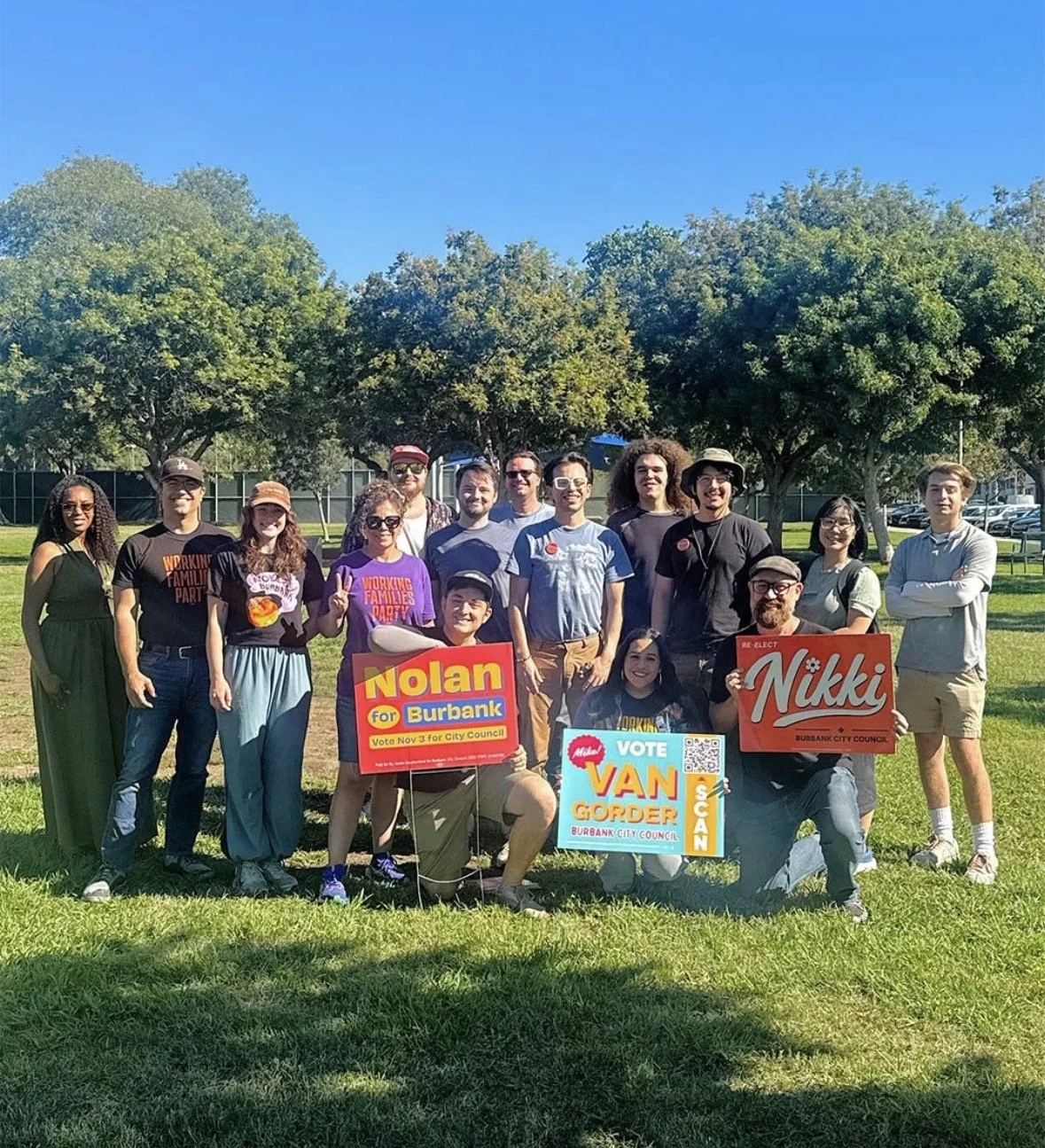
The grassroots powered this win
It wasn’t Nolan I’d underestimated, or even myself. It was the grassroots — the progressive movement writ large. Somewhere between 20 to 40 volunteers showed up every week to knock thousands of doors. I’d knocked 7,600 over two campaigns, and I’d carried more than my own literature at every opportunity for a group canvass. My decade of losses had added up to a commanding (second-place) victory, and the limitless energy of the Burbank grassroots movement reelected terrific progressive Nikki Perez and created a one-and-done democratic socialist victor in Nolan Southerland. People wanted change, and Burbank picked three changemakers.
After my first loss in 2017, I wrote a consolation speech called “When We Win”:
When we win, we will win harder and more absolutely than any fake, troll, billionaire president or sellout establishment hack can imagine. When we win, we will have student loan debt forgiveness and give the primes of our students’ lives back to them. When we win, we will have a single-payer healthcare system that guarantees treatment regardless of income. When we win, we will have an economy that says no matter if you rent or own a home, everybody deserves to have enough income to live with dignity, save for the future, and contribute to their communities. When we win, we save this planet from the horrors of an economy built solely for today’s profit over tomorrow’s well-being.
Call it a list of demands. So here I am with an uplifting identity crisis: a loser, a proud loser, having won, staring down the size of the responsibility we have as the modern era’s first socialist city council. The work isn’t done, not by a long shot — we need to deliver to prove that progressives can govern effectively. Mamdani has set the pace and we need to keep it.
So I can no longer lose. That part of my life is over. But this challenge is mirrored in the progressive movement: We can no longer lose. And we will no longer lose. The inflection point is behind us, and from now on our consistency will go in favor of victory, because we’ve shown each other — we’ve shown ourselves — that despite failure upon failure, nothing stops us. Whether we took a long road or a short one, we’ve arrived. Now, we link arms and move forward.
*California Red is researching the question of first-ever DSA City Council majority. It may well be true. But there were at least three DSA members on the seven-member Santa Cruz City Council in the 1980s, including mayor Mike Rotkin. If there was a fourth that body would claim to have been the first. If you know the answer, contact California Red editor Fred Glass (fglasscft@gmail.com).